How ERP Trends in 2026 Will Impact B2B SaaS Growth and Scale
Naapbooks Insights • B2B SaaS Growth • 15 min read
The enterprise software landscape is shifting under our feet. If you're building or leading a B2B SaaS company, the future of ERP systems isn't just background noise. It's the main event that will determine whether your business grows or gets squeezed out.
Here's why this matters right now. ERP systems are the backbone of every major company. They run finance, supply chain, HR, procurement, and revenue operations. When a customer picks their ERP, they're essentially choosing their digital operating system. And everything else, including your SaaS product, either plays nicely with that system or gets left behind.
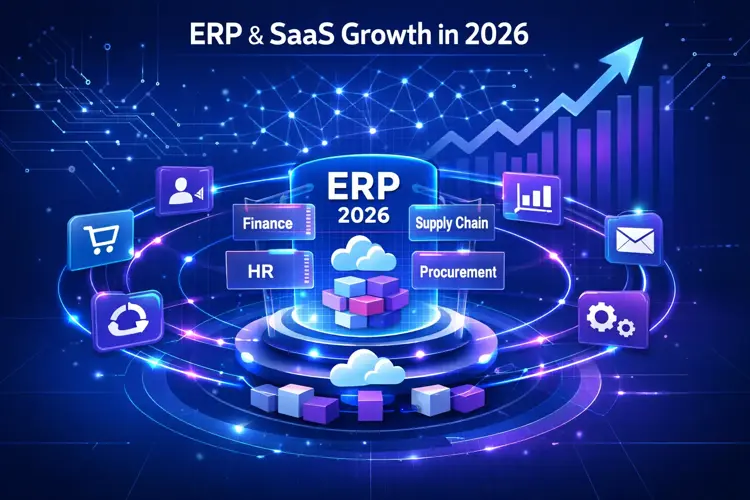
The ERP transformation 2026 is happening faster than most people realize. Companies are moving to the cloud, breaking apart monolithic systems, and layering AI on top of everything. This creates massive opportunities for SaaS providers who understand the game. But it also means the rules are changing, and what worked in 2023 won't cut it anymore.
Why ERP Trends 2026 Should Be on Every SaaS Leader's Radar
Let's start with the basics. ERP used to be that clunky system your finance team complained about. Not anymore. Modern ERP platforms are becoming intelligent, modular, and deeply integrated into daily workflows.
The shift to cloud ERP trends has accelerated dramatically. Companies that spent years planning migrations are now executing them in months. Why? Because staying on legacy systems means falling behind on automation, analytics, and customer experience.
But here's the part most SaaS companies miss. Once a customer standardizes their ERP, that choice creates gravity. It pulls other buying decisions into its orbit. Your SaaS product either integrates seamlessly with their ERP or becomes a friction point. And in 2026, friction equals churn.
The enterprise software trends 2026 point to consolidation. IT teams are tired of managing 200 different tools. They want fewer vendors, tighter integration, and platforms that actually talk to each other without constant babysitting.
AI Powered ERP: The Operating System Gets Smarter
The biggest change coming is how AI powered ERP platforms are evolving from record keepers to decision engines. Major vendors are embedding AI copilots directly into AP, AR, forecasting, and procurement workflows.
What this means practically:
- Finance teams can ask questions in plain English and get answers from their ERP data
- Exception handling becomes automated instead of manual
- Forecasting moves from quarterly guesswork to continuous intelligenc
- Procurement decisions get suggested based on spend patterns and supplier performance
For B2B SaaS companies, this creates a challenge and an opportunity. The challenge is that ERPs are getting smarter and eating features that used to belong to standalone apps. The opportunity is that intelligent ERP platforms create demand for specialized tools that go deeper than generic ERP modules.
Your SaaS product can't just be a feature anymore. It needs to be a decision and workflow engine with measurable outcomes. Companies will ask: Does this tool make us faster, smarter, or more profitable? If the answer isn't clear, they'll stick with the ERP module.
This shift also changes pricing. The old seat-based model is dying. Outcome based SaaS pricing tied to automation, usage, and business results is becoming standard. If your tool saves 50 hours a month or reduces payment errors by 30%, that value should be reflected in how you charge.
Composable ERP and the Rise of Best of Breed Ecosystems
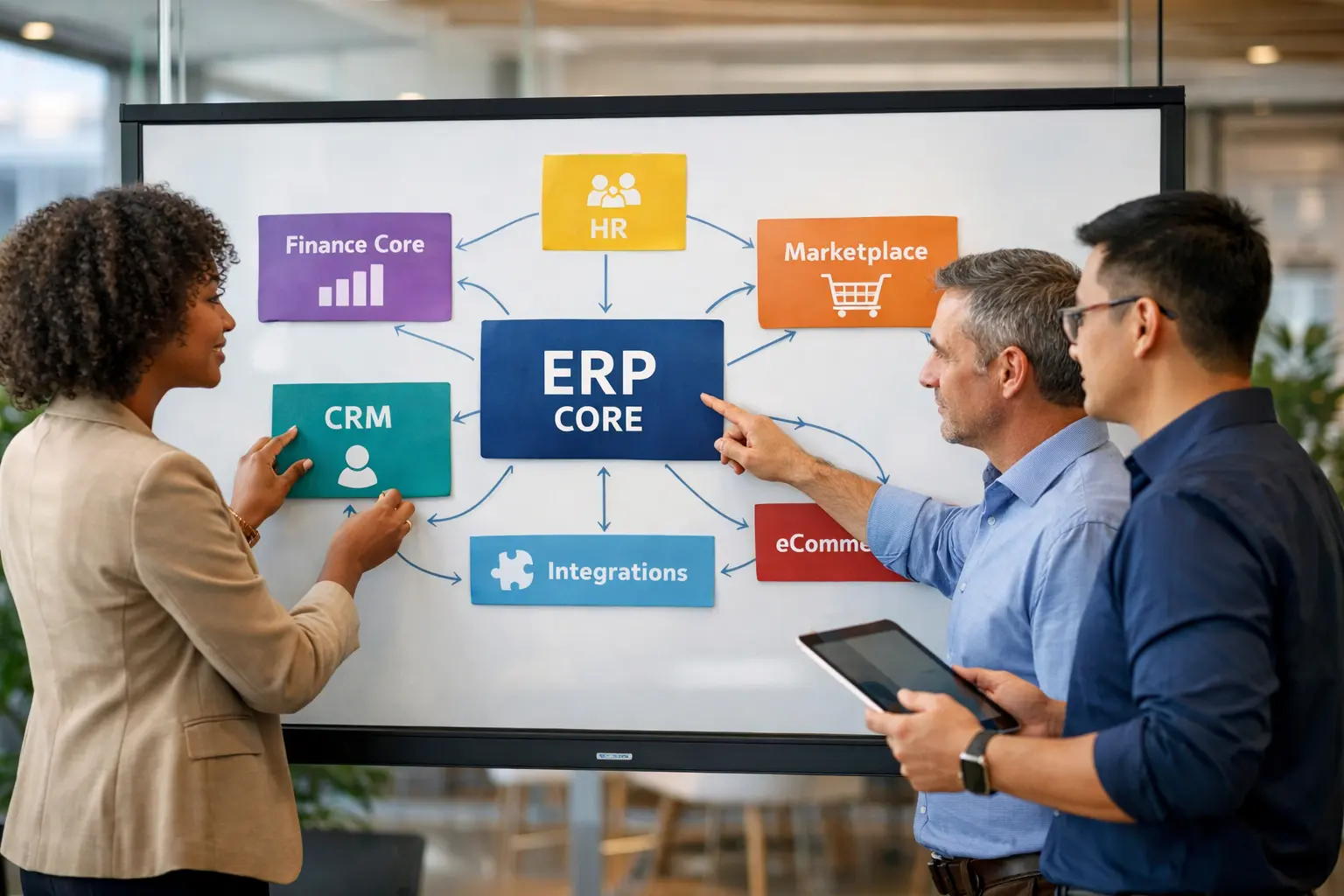
The next generation ERP architecture is modular, not monolithic. Vendors are building composable ERP systems where customers pick core modules and extend them through marketplaces and APIs.
This is a fundamental change. Instead of buying everything from one vendor, companies are building their own stack with a strong ERP core plus specialist SaaS apps for specific functions.
What makes this trend powerful:
- ERP marketplace ecosystem platforms are becoming real demand channels, not just catalogs
- Prebuilt integrations and certified connectors reduce implementation time from months to weeks
- Reference architectures give customers confidence that the pieces will work together
For SaaS providers, this opens up massive opportunities. Category leaders can reach enterprise buyers through ERP marketplace growth channels. But only if your integration is fast, certified, and reliable.
The companies winning here are treating marketplace presence as seriously as their direct sales motion. They're building ERP partner enablement programs, creating implementation playbooks, and co-selling with ERP vendors.
The modular ERP systems trend also means you need repeatable integration packages by ERP type, industry, and region. One size fits all doesn't work anymore. A manufacturing company on SAP needs different workflows than a healthcare org on Oracle.
ERP Integration Trends: From Connect to Operate Reliably
Five years ago, integration meant getting data to sync occasionally. Today, customers expect real time sync, event driven architectures, and complete visibility into what's happening between systems.
The bar for ERP SaaS integration has risen dramatically:
- Near real time data sync is now baseline, not premium
- Audit trails and data lineage are required for compliance
- Monitoring, retries, and error handling need to be automatic
- Customers want prebuilt connectors, not custom development projects
This changes the game for SaaS ERP compatibility. Integration can't be something you bolt on after closing a deal. It needs to be a core product feature from day one.
The impact on growth is significant. Companies with ERP native connectors and smooth onboarding see lower CAC and faster time to value. Their customers go live in weeks instead of quarters.
But this requires investment. You need dedicated integration engineering, monitoring infrastructure, and DevOps resources. ERP integration reliability becomes a major churn driver. When syncs fail or data gets corrupted, customers leave.
The companies scaling successfully are building SaaS reference architecture frameworks that work across multiple ERPs. They're investing in iPaaS platforms and standardizing how they handle authentication, rate limiting, and error recovery.
Security and Compliance: The New Gatekeepers
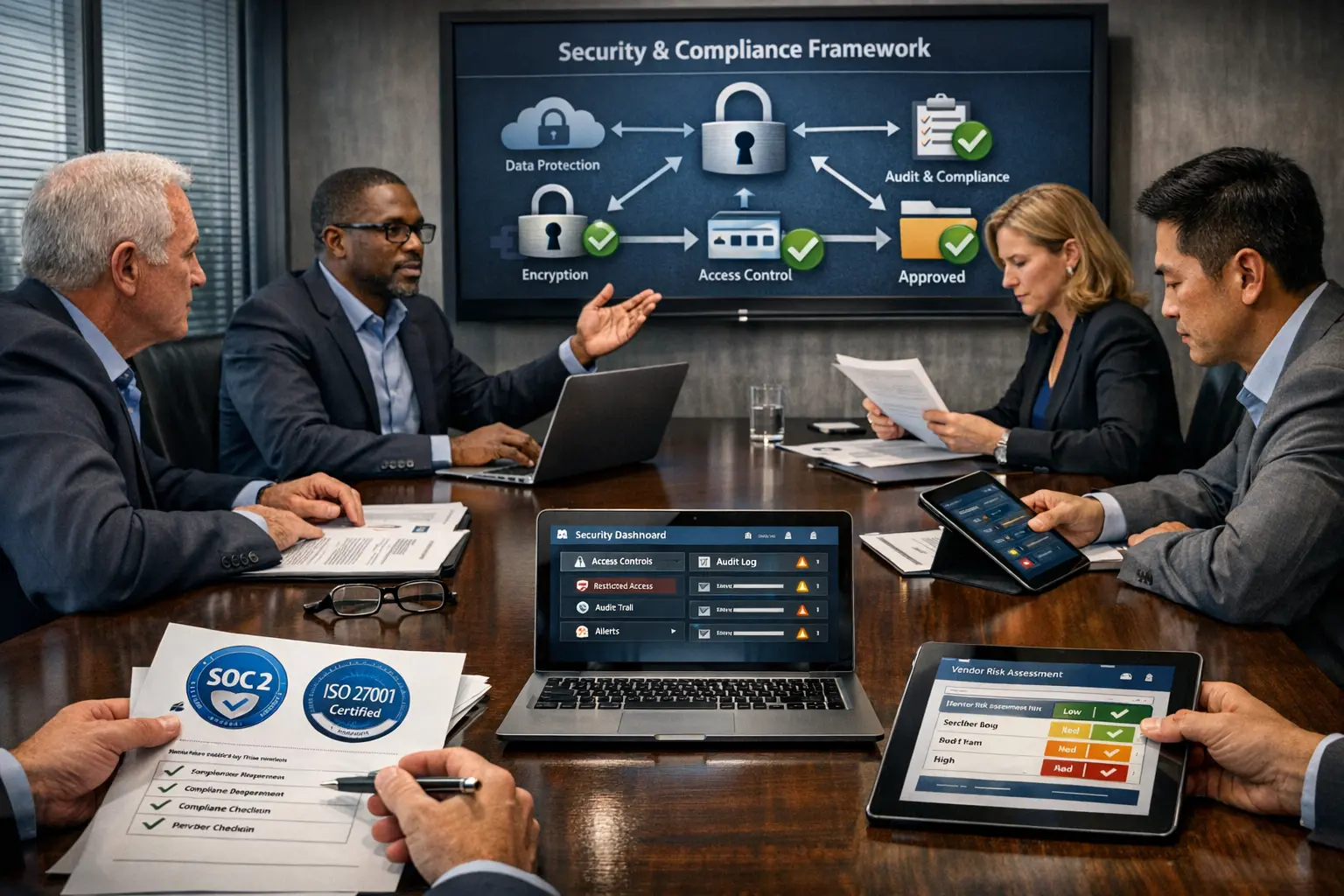
Here's a truth that catches many SaaS companies off guard. In enterprise deals, security posture now influences win rates as much as feature parity.
The ERP security compliance requirements have gotten stricter:
- Data residency rules based on geography and industry
- Tight controls on who can access what data and when
- Third party risk assessments that take months
- Questions about how your AI models are trained and what data they use
Enterprise SaaS compliance isn't optional anymore. It's table stakes. Buyers are consolidating vendors partly to reduce security risk. They want fewer companies touching their data.
This creates advantage for SaaS providers who invest early in governance. Strong SaaS enterprise compliance frameworks, industry certifications, and transparent AI policies become competitive differentiators.
The flip side is longer sales cycles. Unless you have automated proof packs, security documentation, and compliance evidence ready to go, you'll spend months in procurement purgatory.
Smart companies are building ERP governance framework alignment into their product strategy. They're getting SOC 2, ISO 27001, and industry specific certifications. They're documenting their data handling, encryption, and AI training practices.
Vertical SaaS Growth Gets Tailwinds from Industry Specific ERP
ERP vendors are pushing hard into industry specific ERP templates. Instead of selling generic systems, they're offering preconfigured processes for manufacturing, healthcare, retail, logistics, and public sector.
Customers love this because it reduces implementation time and gives them best practice workflows out of the box. They're buying reference processes, not just software.
For SaaS companies, this trend splits the market:
- Horizontal SaaS faces a higher bar to prove value across industries
- Vertical SaaS growth accelerates because deep industry knowledge becomes more valuable
If you're building vertical SaaS, this is your moment. Industry specific ERP deployments create demand for specialized tools that understand regulatory requirements, industry workflows, and domain specific data models.
The B2B SaaS revenue growth opportunity is in packaging your product for micro verticals. Instead of "accounting software, "it's" construction accounting with ERP integration and certified "compliance for GCs."
This changes your GTM motion. You need industry templates, compliance documentation, and reference architectures ready to deploy. Implementation becomes faster because you're not starting from scratch every time.
Finance Transformation Drives Connected Operations
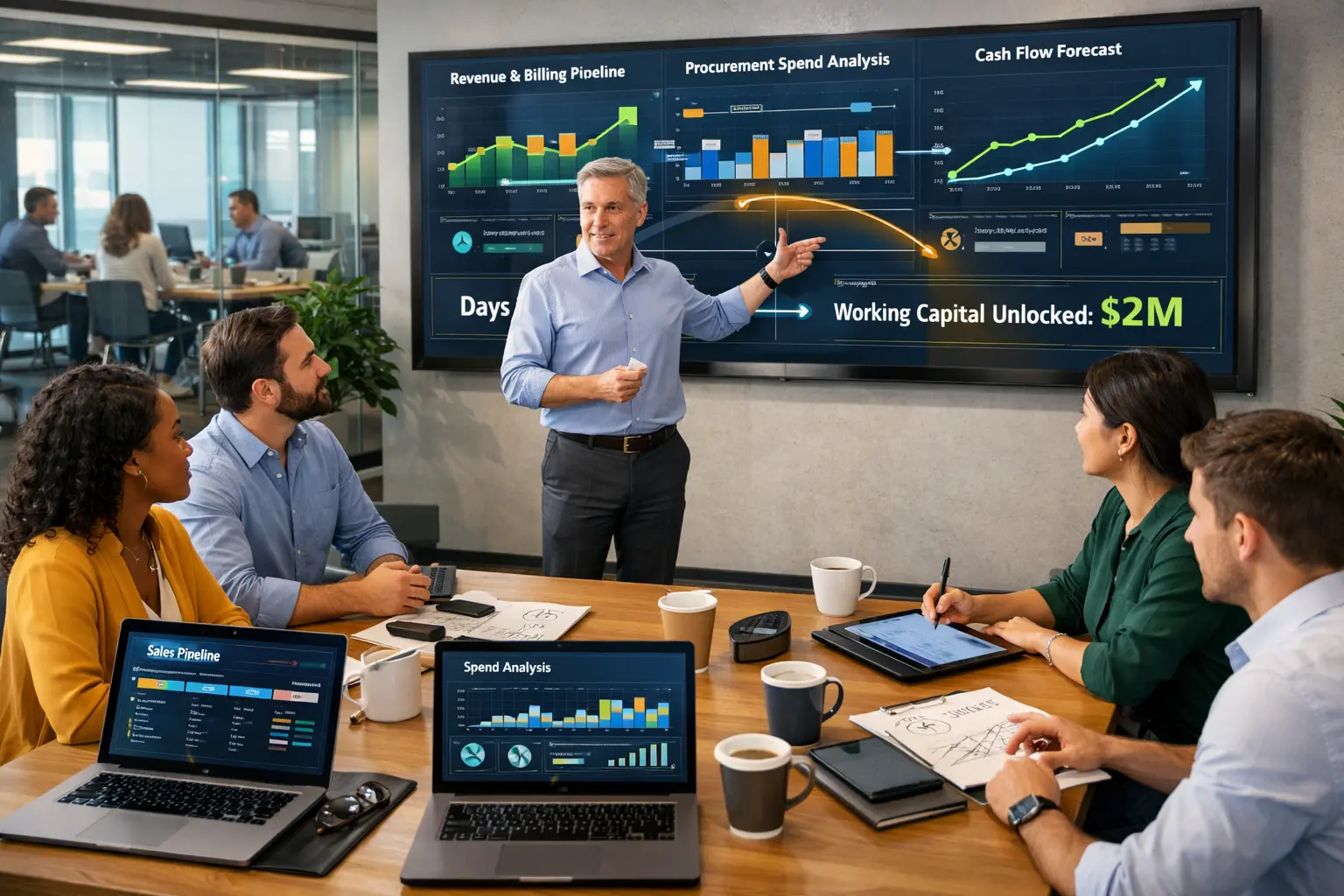
The CFO agenda has shifted. Profitability, cash efficiency, and forecasting accuracy are top priorities. This is driving ERP modernization trends in finance departments faster than any other function.
Finance leaders are consolidating their tech stacks and demanding tools that connect revenue, spend, and planning into one view. They're tired of reconciling data across 15 different systems.
This creates spikes in demand for:
- RevOps platforms that connect CRM to billing to revenue recognition
- CPQ tools that integrate with ERP for accurate quoting and contracts
- Spend analytics that surface where money is leaking
- Close automation that reduces month end from two weeks to three days
The SaaS land and expand strategy becomes more effective when you can show measurable CFO metrics. "We reduced days to close by 40%" or "We unlocked $2M in working capital" wins deals.
ERP driven SaaS buying often starts in finance now. The CFO sponsors a tool that solves a specific pain point, and then it expands to other departments because the ERP integration is already proven.
Partner Ecosystems and the SI Influence
System integrators and managed service providers are becoming more powerful in the buying process. Enterprises rely on them for ERP modernization and app rationalization projects.
For B2B SaaS companies, this means SaaS partner ecosystems matter as much as your direct sales team. An SI endorsement can make or break enterprise deals.
The companies scaling efficiently are building SI ready enablement:
- Implementation playbooks that SIs can follow
- Certification programs that train SI teams
- Margin friendly pricing that makes delivery profitable for partners
- ERP channel partnerships with clear rules and account management
This requires balancing channel conflict carefully. You need partners to expand your reach without cannibalizing direct deals or creating poor customer experiences.
The ERP partner enablement investment pays off in faster enterprise growth with lower CAC. Your partners become an extension of your sales and implementation capacity.
Platform Consolidation and App Rationalization
IT teams are actively reducing vendor sprawl. The average enterprise uses 200+ SaaS tools, and that number is going down, not up.
Procurement departments are demanding interoperability and lower total cost. They're asking hard questions about why they need 12 point solutions when the ERP vendor offers modules that are "good enough."
This trend creates substitution risk for SaaS scalability challenges in categories adjacent to ERP. If your product does something similar to an ERP module, you need to prove unique value clearly.
Strong positioning becomes critical. Your message should be "the ERP extends us for advanced use cases" rather than "we compete with the ERP." Show how you complement rather than duplicate.
Bundle resistant differentiation comes from:
- Speed to implement and iterate
- Workflow depth that ERPs can't match
- Vertical specific compliance and features
- AI outcomes that generic modules don't deliver
The 2026 Playbook: What B2B SaaS Growth Trends Winners Do Differently
Let me break down the practical moves that separate companies capturing ERP driven SaaS sales growth from those getting squeezed out.
Product priorities:
- Build ERP ready SaaS products with certified connectors from day one
- Create event driven sync architecture, not batch processing
- Add robust audit trails and data lineage tracking
- Implement AI governance with permissions, traceability, and human oversight
Go to market shifts:
- Launch in ERP marketplace ecosystem platforms as a demand channel
- Build ERP integration strategy packages by vendor, industry, region
- Develop ERP aligned SaaS products positioning that complements rather than competes
- Create ROI calculators tied to CFO and COO metrics
Customer success evolution:
- Instrument value realization tracking from usage to business outcomes
- Build ERP onboarding workflows that reduce time to first value
- Create expansion playbooks that follow SaaS land and expand strategy principles
- Monitor integration health as actively as product usage
Operations and scale:
- Invest in SaaS operational scalability for integration reliability
- Automate security and compliance documentation
- Build deployment flexibility for cloud, hybrid, and on premise scenarios
- Create SaaS enterprise readiness assessment frameworks
Tracking What Matters: ERP Driven SaaS Success Metrics

You can't improve what you don't measure. The leading indicators of whether your ERP driven SaaS strategy is working:
Growth metrics:
- Win rate versus ERP native modules in competitive deals
- Attach rate through partner and marketplace channels
- Time to first value by ERP type and deployment model
- B2B SaaS revenue growth from expansion versus new logos
Scale metrics:
- Integration health scores: sync latency, error rates, incident volume
- Services load per customer by ERP complexity
- Support ticket volume related to integration issues
- Gross margin impact from partner delivery mix
Risk indicators:
- Churn rates correlated with integration problems
- ERP dependency risks from single vendor concentration
- Partner conflict incidents and resolution time
- Security audit failure rates and remediation cycles
Navigating Risks in the ERP Software Evolution
Let's talk about what could go wrong. The scaling SaaS platforms playbook for 2026 needs to account for several real risks.
ERP vendors will expand into adjacent categories. Suite encroachment is real. Oracle, SAP, Microsoft, and others are all building or acquiring capabilities that compete with standalone SaaS products.
Your defense is differentiation that matters. Go deeper than the ERP can in your specific domain. Build vertical expertise they can't match. Deliver outcomes, not just features.
AI compliance backlash could create new regulations on data usage and model training. Be proactive with governance and transparency. Make your AI explainable and auditable.
Integration fragility at scale is a real concern. As you grow from 100 to 1000 customers across multiple ERPs, the complexity compounds. Invest in monitoring, testing, and incident response before you need it.
Partner dependency creates account access risk. SIs can control relationships and lock you out of expansion opportunities. Balance channel partnerships with direct relationships.
Making Future Proof SaaS Decisions Now
The ERP transformation 2026 isn't coming. It's here. The companies winning are those treating ERP strategy as core to their product roadmap, not an afterthought.
Your SaaS ERP roadmap should answer these questions:
- Which ERP platforms represent 80% of our target market?
- What does certification and marketplace presence require?
- How do we build integration reliability into our product DNA?
- What partnerships accelerate our enterprise motion?
The ERP readiness assessment starts with honest evaluation. Are you building for the ERP landscape that exists today or the one coming in 18 months? Are your integrations reliable enough to scale? Does your security posture meet enterprise requirements?
The opportunity for SaaS enterprise expansion has never been bigger. But the bar for execution is higher too. Companies that align their product, go to market, and operations to the modern ERP architecture reality will capture disproportionate growth.
Those that treat ERP integration as a necessary evil rather than strategic advantage will struggle to scale. The choice is yours, but the window to build the right capabilities is closing fast.
The ERP ecosystem strategy you build in 2026 will determine your trajectory for the next five years. Make it count.