Cybersecurity Trends & Data Protection: A Complete Guide for 2026
Naapbooks Insights • Cybersecurity & Data Protection • 5 min read
- What is Cybersecurity in 2026?
- Current Cybersecurity Landscape in 2026
- Top Cybersecurity Trends 2026
- Emerging Cyber Threats 2026
- Data Privacy Challenges 2026
- Modern Data Protection Strategies
- Cybersecurity Compliance Standards
- Cybersecurity Best Practices for Business
- Future of Cybersecurity 2030
- Enterprise Cybersecurity Strategy
- Conclusion: The Path Forward
The digital world is expanding faster than ever, but cyber threats today are more sophisticated and damaging than ever before. Every 39 seconds, a cyber attack happens somewhere in the world, representing real businesses losing money and sensitive data falling into the wrong hands.
Data protection is no longer optional. Understanding cybersecurity trends and implementing strong data protection strategies is critical for survival in our connected world.
This guide covers the current cybersecurity landscape, emerging threats, and how to protect your valuable data in 2026 and beyond.
What is Cybersecurity in 2026?
Cybersecurity protects systems, networks, and data from digital attacks. The importance of cybersecurity goes far beyond installing antivirus software.
The basics of information security include three core principles:
- Confidentiality: Your data stays private
- Integrity: Information remains accurate and unaltered
- Availability: Authorized users can access data when needed
Cybersecurity statistics 2026 show the global cost of cybercrime exceeds $10.5 trillion annually, highlighting why data protection is important for every organization.
Types of Cyber Threats Today
Modern cyber threats include:
- Ransomware attacks that lock your data until payment
- Phishing attacks that steal user credentials
- Malware that silently steals information
- DDoS attacks that shut down services
- Insider threats from employees or contractors
Current Cybersecurity Landscape in 2026
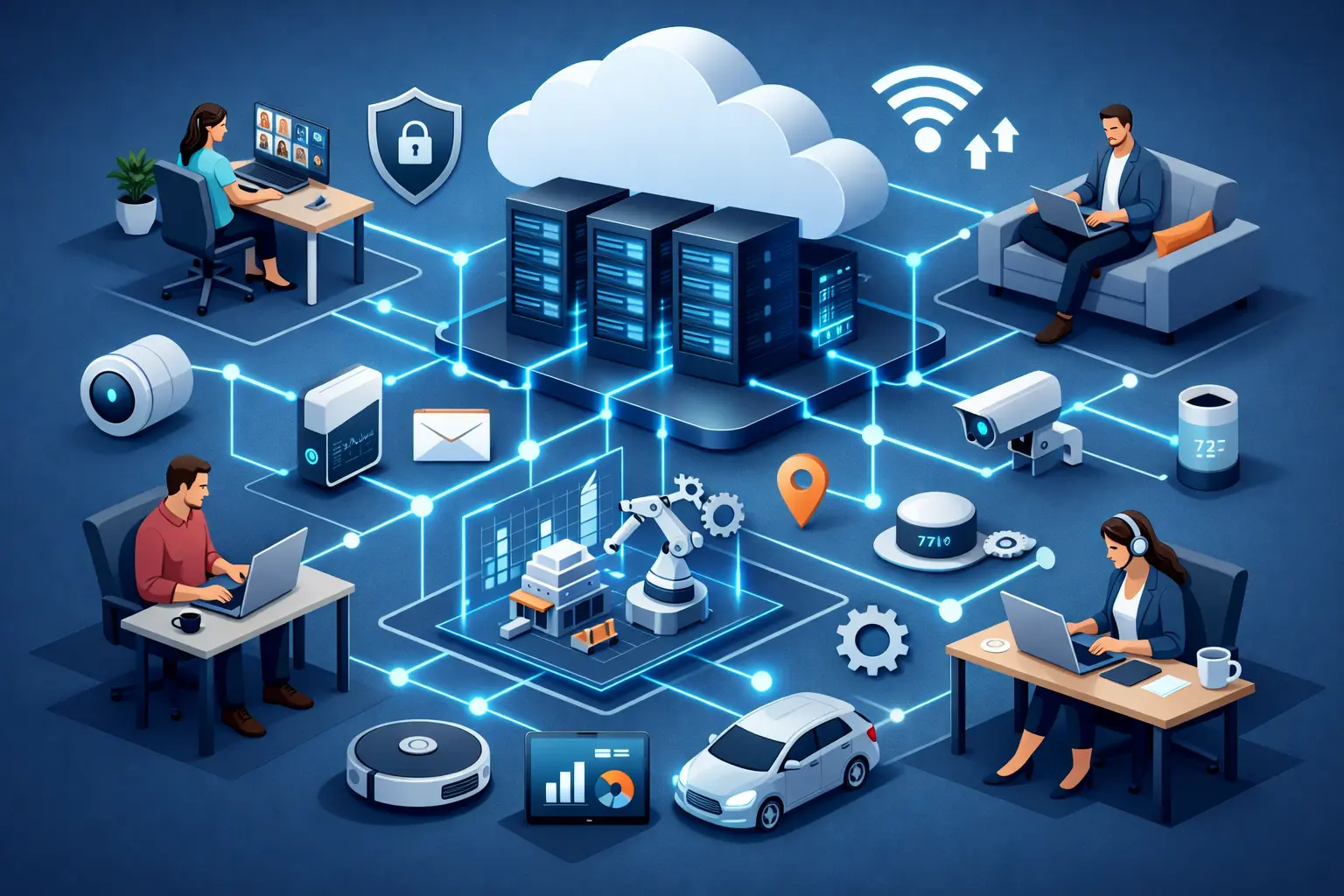
The cybersecurity landscape 2026 has been reshaped by three major shifts:
Digital Transformation Security Challenges
Digital transformation creates new vulnerabilities as businesses move to the cloud. Cloud security challenges include:
- Misconfigured storage buckets exposing sensitive data
- Shadow IT risks from unauthorized apps
- Complex multi-cloud environments that are difficult to monitor
- Shared responsibility confusion with cloud providers
Hybrid Work Security Risks
Remote work eliminated traditional security perimeters. Hybrid work security risks include:
- Unsecured home networks becoming entry points
- Personal devices accessing sensitive company data
- Mobile device security gaps
- VPN vulnerabilities and misuse
A remote work cybersecurity checklist should cover endpoint protection, secure access policies, and comprehensive training.
IoT Security Vulnerabilities
The IoT ecosystem includes billions of connected devices with weak security. IoT security vulnerabilities exist because:
- Most devices lack basic security features
- They rarely receive security updates
- Manufacturers prioritize functionality over protection
- Connected device security solutions are still developing
Top Cybersecurity Trends 2026
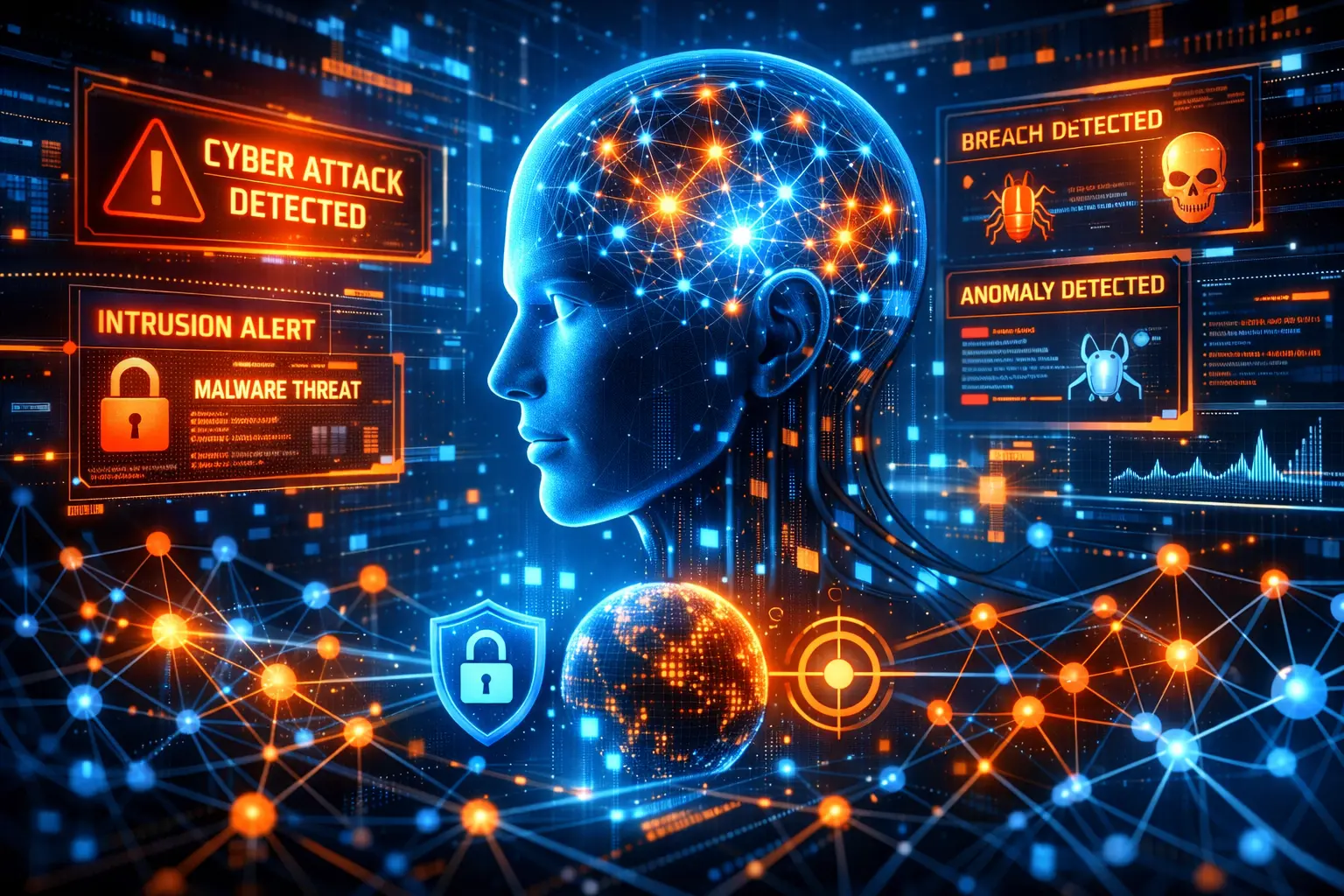
Understanding latest cybersecurity trends helps you stay ahead of threats.
Artificial Intelligence in Cybersecurity
AI in cybersecurity is a double-edged sword. AI-driven threat detection tools offer powerful capabilities:
- Analyze millions of events per second
- Identify unusual patterns humans miss
- Respond to threats automatically
- Predict attacks before they happen
However, AI-powered cyber attacks are also becoming more common as hackers use machine learning to find vulnerabilities.
Zero Trust Security Model
The zero trust security approach assumes threats exist everywhere. Zero trust architecture benefits include:
- Verification required for every access request
- Least privilege access for all users
- Continuous authentication and monitoring
- Micro-segmentation of network resources
Zero trust data protection checks identity, device health, and context before granting access.
Ransomware Attack Trends
Ransomware attacks continue dominating the threat landscape. Recent ransomware attack trends show:
- Double and triple extortion tactics
- Targeting of backup and disaster recovery systems
- Ransomware-as-a-service making attacks easier
- Higher ransom demands reaching millions of dollars
Organizations need automated security solutions that detect and stop ransomware before it spreads.
Cloud Security Solutions
Cloud security is critical as businesses adopt cloud services. Cloud native security approaches include:
- Cloud Access Security Brokers (CASB)
- Cloud Workload Protection Platforms (CWPP)
- Cloud data security tools
- Multi-cloud security management platforms
These solutions protect data across multi-cloud environments where information flows between different cloud providers.
Supply Chain Security
Supply chain cyber attacks target the weakest link in vendor networks. Supply chain security requires:
- Vendor risk assessment programs
- Third-party risk management processes
- Software supply chain verification
- Continuous monitoring of supplier access
Emerging Cyber Threats 2026

Understanding emerging threat vectors helps you prepare for new attacks.
Social Engineering Attacks
Social engineering attacks manipulate human psychology rather than exploiting technical vulnerabilities. Common techniques include:
- Pretexting with fake scenarios
- Baiting with free offers or rewards
- Tailgating into secure physical areas
- Impersonation of trusted individuals
Phishing resistant MFA can help prevent these attacks.
Deepfake Security Risks
Deepfake fraud attacks use AI to create fake videos or audio. How to spot deepfake fraud:
- Watch for unnatural facial movements or expressions
- Listen for audio inconsistencies and glitches
- Verify requests through separate channels
- Use multi-factor authentication for sensitive actions
Advanced Persistent Threats (APT)
Advanced persistent threats are sophisticated, long-term attacks where hackers remain undetected for months. APT characteristics include:
- Targeting specific organizations
- Using multiple attack vectors
- Stealing data gradually over time
- Leaving backdoors for future access
Insider threat detection systems help identify unusual behavior indicating APT activity.
Business Email Compromise (BEC)
Business email compromise tricks employees into transferring money through fake emails. Preventing account takeover attacks requires:
- Email authentication protocols
- Employee training on verification procedures
- Security awareness training programs
- Anomaly detection systems
Data Privacy Challenges 2026
Organizations face multiple data protection challenges simultaneously.
Growing Data Volumes
Enterprise data governance struggles with exponential data growth. Data governance issues include:
- Data sprawl across multiple systems
- Unknown or undocumented data locations
- Duplicate and outdated information
- Shadow AI data leakage from unauthorized tools
Compliance and Privacy Requirements
Data privacy concerns are rising. Managing data privacy compliance means:
- Understanding applicable regulations
- Implementing technical controls
- Documenting data processing activities
- Training employees on privacy requirements
The cost of data breach 2026 includes immediate losses, regulatory fines, legal costs, and damaged reputation.
Cross Border Data Transfer
Cross border data transfer risks create challenges for global businesses. Data protection laws often conflict, forcing companies to:
- Maintain data in specific geographic regions
- Implement additional security safeguards
- Navigate complex legal requirements
- Monitor constantly changing regulations
Modern Data Protection Strategies
Effective data protection solutions require multiple defense layers.
Data Loss Prevention (DLP) Strategies
Data loss prevention tools monitor, detect, and block sensitive data from leaving your organization. Best DLP tools for enterprise should:
- Classify data automatically based on sensitivity
- Monitor data in motion, at rest, and in use
- Enforce policies consistently across all channels
- Provide detailed reporting and alerts
Enterprise Data Encryption
Data encryption methods transform readable data into coded format. Enterprise data encryption should cover:
- Data at rest on storage systems
- Data in transit across networks
- Data in use during processing
- Post-quantum cryptography readiness for future threats
Secure data storage methods combine encryption with access controls.
Identity and Access Management (IAM)
Identity and access management ensures only authorized users access specific resources. Strong IAM includes:
- Multi-factor authentication for all users
- Role-based access control
- Privileged access management
- Endpoint protection solutions
Disaster Recovery Planning
Disaster recovery planning prepares your organization to restore operations after cyber attacks. Key considerations include:
- Regular automated backup schedules
- Cloud backup vs on-premise storage evaluation
- Recovery time objectives and priorities
- Regular testing of recovery procedures
Backup and disaster recovery systems should be isolated to prevent ransomware from reaching them.
Cybersecurity Compliance Standards
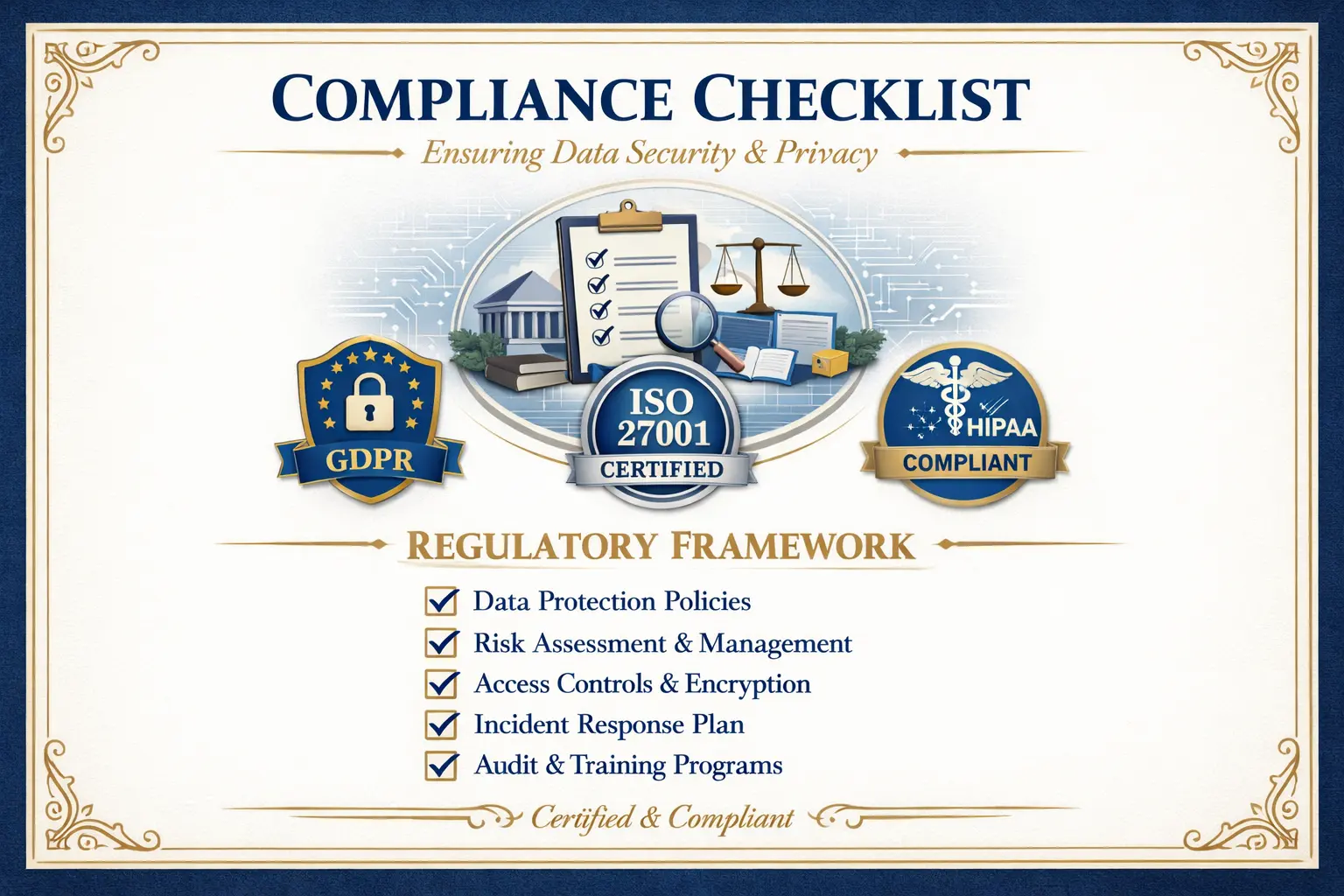
The regulatory and compliance landscape continues evolving. Understanding requirements is essential for avoiding penalties.
GDPR Compliance Checklist 2026
GDPR compliance remains critical for organizations handling European data. Your GDPR compliance checklist 2026 should include:
- Complete data mapping and inventory
- Privacy policy updates and disclosures
- Consent management systems
- Data subject rights procedures
- Breach notification processes
ISO 27001 Certification
ISO 27001 provides a framework for information security management. ISO 27001 certification demonstrates your commitment to security best practices.
NIST Cybersecurity Framework
The NIST cybersecurity framework offers a flexible approach through five core functions: Identify, Protect, Detect, Respond, and Recover.
Industry-Specific Requirements
Data privacy regulations vary by industry, including:
- HIPAA data security requirements for healthcare
- Financial services regulations like SOX and PCI-DSS
- Education privacy laws such as FERPA
- Government contractor standards
Automated compliance monitoring tools help track changing requirements and maintain continuous compliance.
Cybersecurity Best Practices for Business
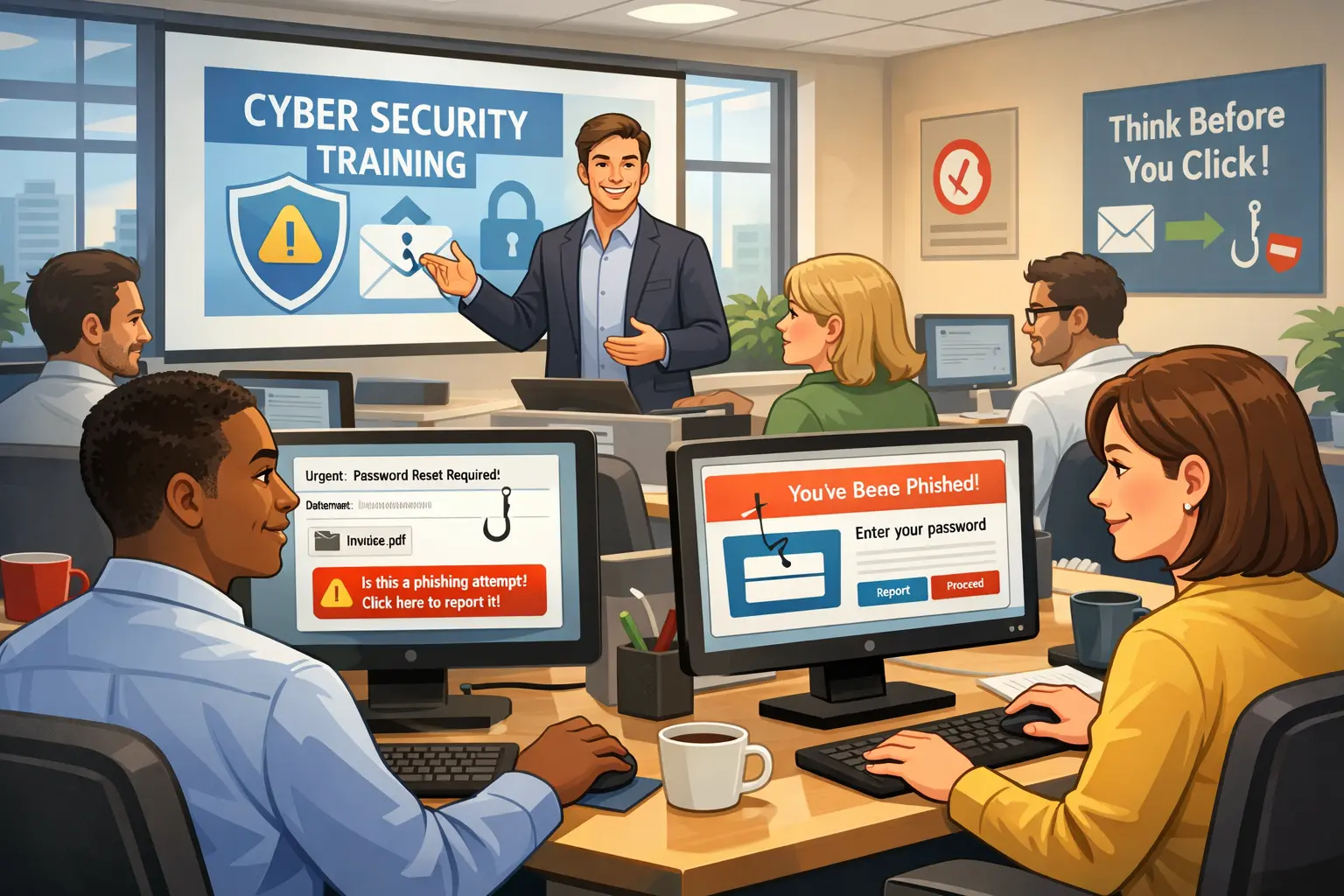
Implementing cybersecurity best practices protects your organization from common threats.
Security Awareness Training
Employee security training is your first line of defense. Effective programs include:
- Employee phishing simulation tools
- Regular interactive training sessions
- Security champions in each department
- Cyber hygiene checklist 2026 for daily practices
Incident Response Plan Template
Every organization needs an incident response plan. Your incident response plan template should cover:
- Detection and analysis procedures
- Containment strategies and actions
- Eradication and recovery steps
- Post-incident review process
Developing a cyber defense strategy requires planning for prevention and response.
Vulnerability Assessment Tools
Regular vulnerability assessment identifies weaknesses before attackers find them. Vulnerability assessment tools should:
- Scan networks and applications continuously
- Prioritize risks by severity and exploitability
- Integrate with remediation workflows
- Track progress and improvements over time
Combine this with network security audit procedures.
Cyber Risk Assessment
Cyber risk assessment helps prioritize security investments. A thorough assessment includes:
- Asset identification and valuation
- Threat and vulnerability analysis
- Impact and likelihood evaluation
- Risk treatment recommendations
Future of Cybersecurity 2030

The future of cybersecurity will be shaped by emerging technologies and evolving threats.
Quantum Computing Security
Quantum computing security presents both opportunities and challenges. Quantum computers could break current encryption but enable new protection methods. Post-quantum encryption standards are being developed now.
Autonomous Security Systems
Autonomous security systems will handle routine tasks automatically. Predictive security analytics will:
- Identify threats before they materialize
- Automate responses to common attacks
- Adapt to new threat patterns continuously
- Reduce response times dramatically
Blockchain in Cybersecurity
Blockchain technology offers solutions for identity verification, secure transactions, and tamper-proof audit trails.
Cybersecurity Skills Gap Future
The cybersecurity skills gap continues growing. Organizations struggle to find qualified professionals to manage complex security environments.
Enterprise Cybersecurity Strategy
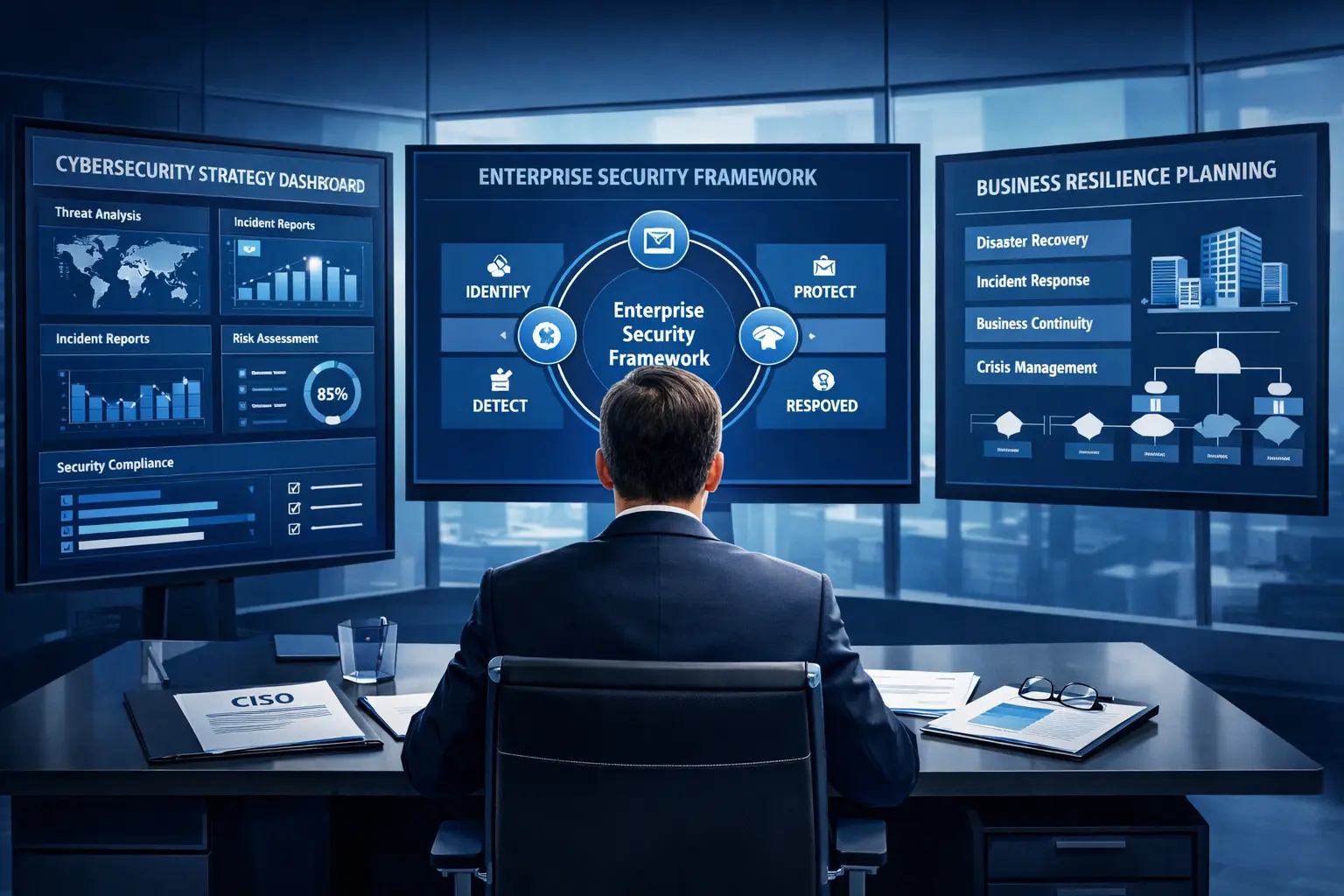
Building a comprehensive enterprise cybersecurity strategy requires balancing multiple priorities.
Cyber Resilience Framework
A cyber resilience framework ensures your organization can continue operating during and after attacks. Components include:
- Business continuity planning procedures
- Redundant systems and processes
- Regular testing and updates
- Clear communication procedures
CISO Strategy Roadmap
Chief Information Security Officers need a clear CISO strategy roadmap that aligns security with business objectives. Your enterprise security strategy should:
- Support business goals rather than blocking them
- Scale with organizational growth
- Adapt to changing threat landscapes
- Demonstrate measurable value
Aligning security with business goals ensures executive support and adequate resources.
Building a Security Culture
Building a security culture makes cybersecurity everyone's responsibility. This requires:
- Executive commitment and role modeling
- Regular communication about security
- Recognition for good security practices
- Integration into all business processes
Cybersecurity budget planning 2026 should reflect the true cost of protection, including tools, people, training, and incident response capabilities.
Conclusion: The Path Forward
Cybersecurity trends and data protection challenges will continue evolving. Threats become more sophisticated each year, regulations become stricter, and technology grows more complex.
Organizations that succeed understand the importance of cybersecurity and invest in comprehensive protection strategies. They combine technology, processes, and people to create resilient defenses.
Proactive cybersecurity planning beats reactive responses every time. Start with the basics: strong data encryption, regular security awareness training, clear policies, and continuous monitoring.
Building resilient data protection ecosystems requires commitment from every level of the organization. Security must be a shared value and responsibility.
You don't have to do everything at once. Start where you are, assess your current risks, prioritize the most critical assets and threats, and build your defenses layer by layer. Perfect security doesn't exist, but significant improvement is always possible.