eNotary Explained: What It Is, Why It Matters, and How It Works

Naapbooks Insights • Traditional Notarization • 5 min read
Getting documents notarized used to mean taking time off work, driving across town, and waiting in line at a notary office. But what if you could get your important papers notarized from your living room in minutes? That's exactly what eNotary services make possible.
In today's digital world, electronic notarization is changing how we handle legal documents. Whether you're closing on a house, signing a power of attorney, or finalizing business contracts, understanding eNotary can save you time, money, and a lot of hassle.
What Is an eNotary?
eNotary (short for electronic notary) refers to the process of notarizing documents electronically instead of using traditional paper and ink. Think of it as the digital version of getting your signature verified by a licensed notary public.
Here are the key components that make electronic notarization work:
- Electronic documents that can be signed digitally
- Digital signatures instead of handwritten ones
- Electronic notary seals that are tamper-proof and secure
It's important to understand that eNotary comes in two main types:
In-Person Electronic Notarization (IPEN): You meet the notary face to face, but the documents and signatures are electronic.
Remote Online Notarization (RON): Everything happens online through video call. You never need to meet the notary in person.
How eNotary Differs from Traditional Notarization
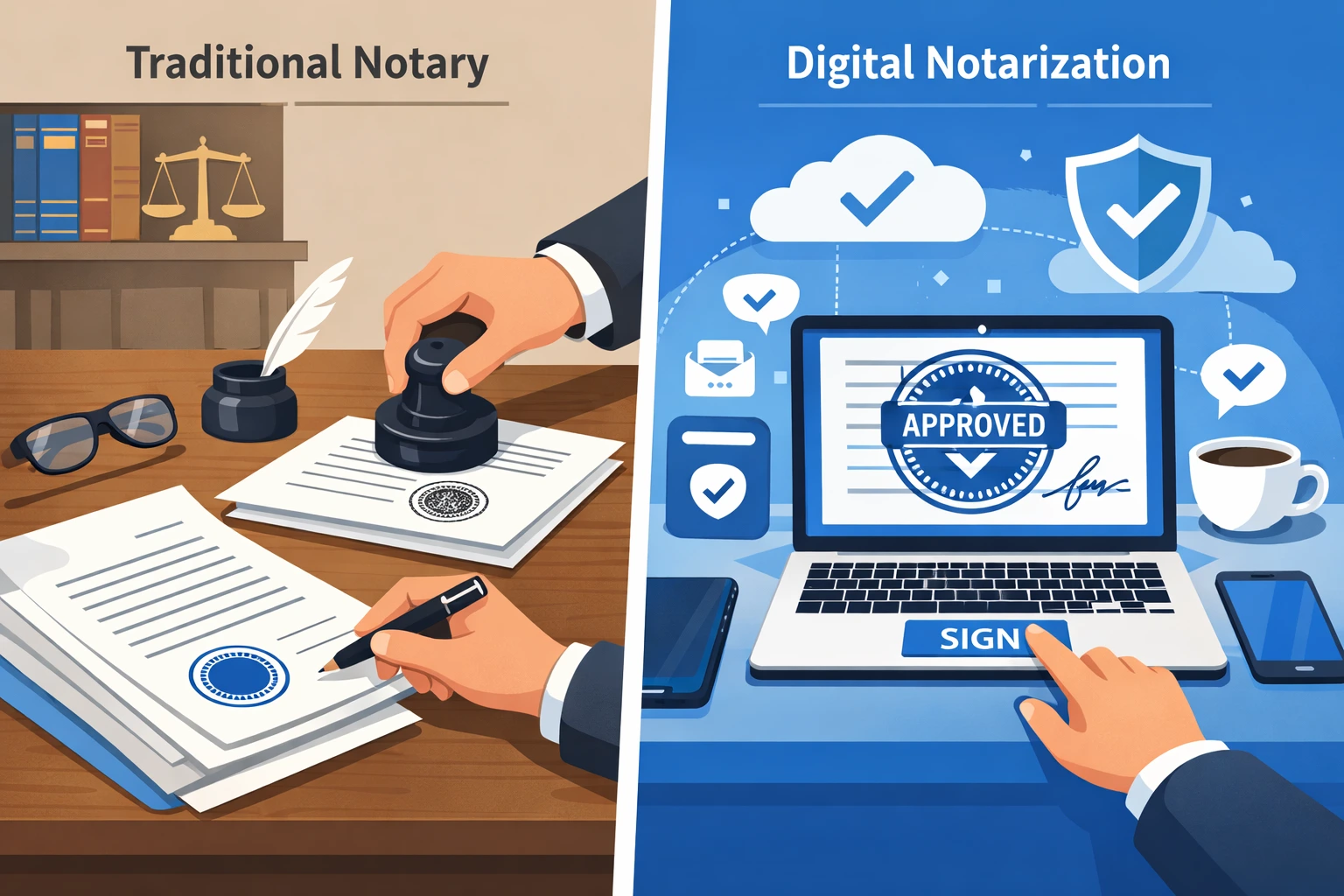
The differences between traditional notarization and eNotary are pretty straightforward:
Documents: Paper documents versus electronic documents that live in the cloud.
Presence: Meeting in person versus connecting through a secure video platform.
Signatures: Ink signatures versus digital signatures that are encrypted and verified.
Seals: Physical rubber stamps versus tamper-evident electronic seals that show if anyone tries to alter the document.
The core purpose remains the same. Both methods verify your identity and confirm you're signing willingly. The difference is in how that verification happens.
Why eNotary Matters for Modern Transactions
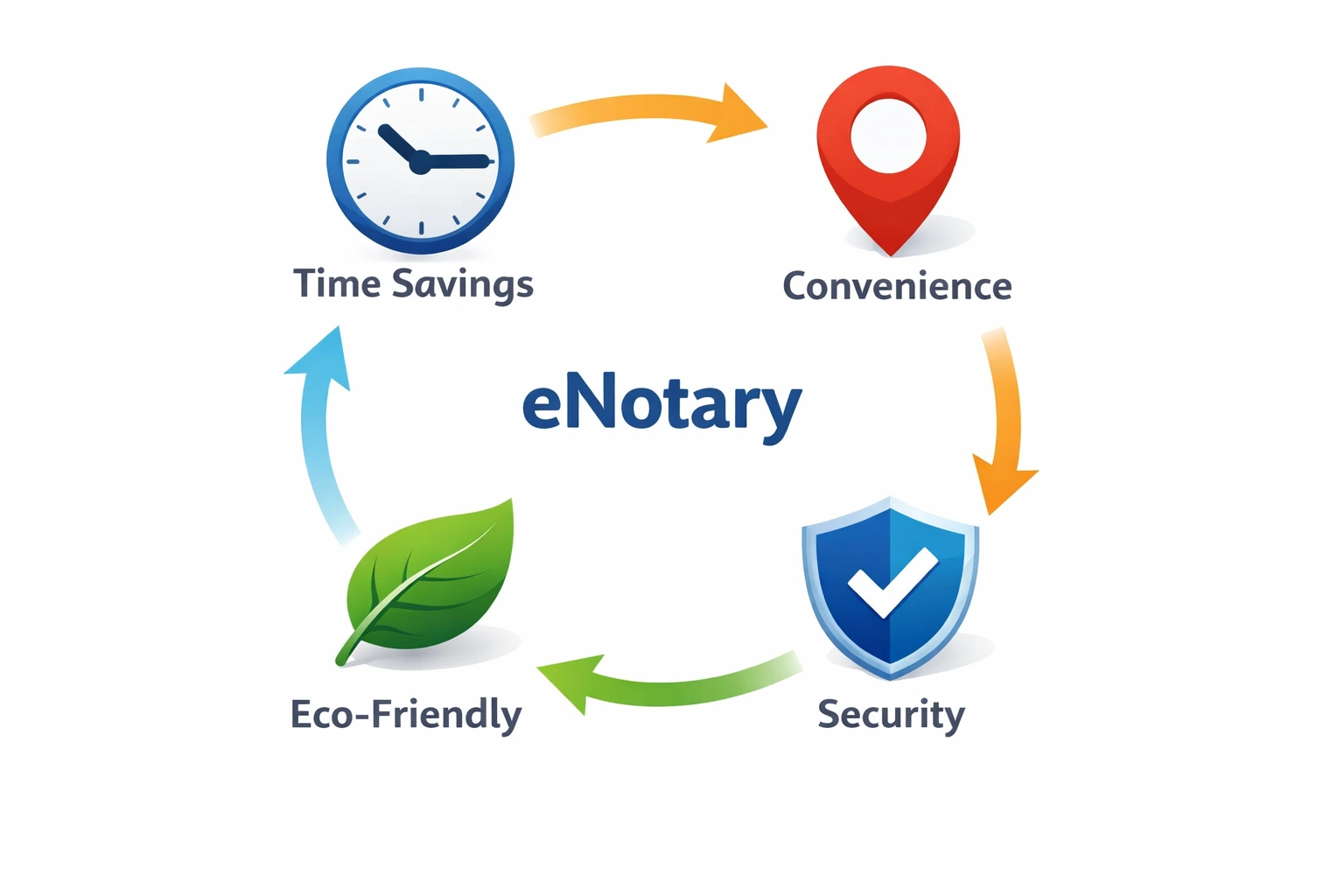
Electronic notarization isn't just a tech upgrade. It solves real problems that people face every day.
Convenience and accessibility top the list. You can get documents notarized during evening hours or weekends when traditional notary offices might be closed. No more rushing during your lunch break or taking time off work.
Time and cost savings add up quickly. You skip the commute, parking fees, and waiting time. Many remote online notarization services complete the entire process in 15 minutes or less.
Support for remote work has become essential. When team members are spread across different cities or states, eNotary keeps business moving without requiring everyone to gather in one location.
Enhanced security might surprise you. Electronic notarization creates detailed audit trails that track every step of the process. The digital signatures and seals are actually harder to forge than traditional ones.
Environmental benefits matter too. Going paperless with eNotary reduces waste and supports sustainability goals that many companies now prioritize.
How eNotary Works: The Complete Process
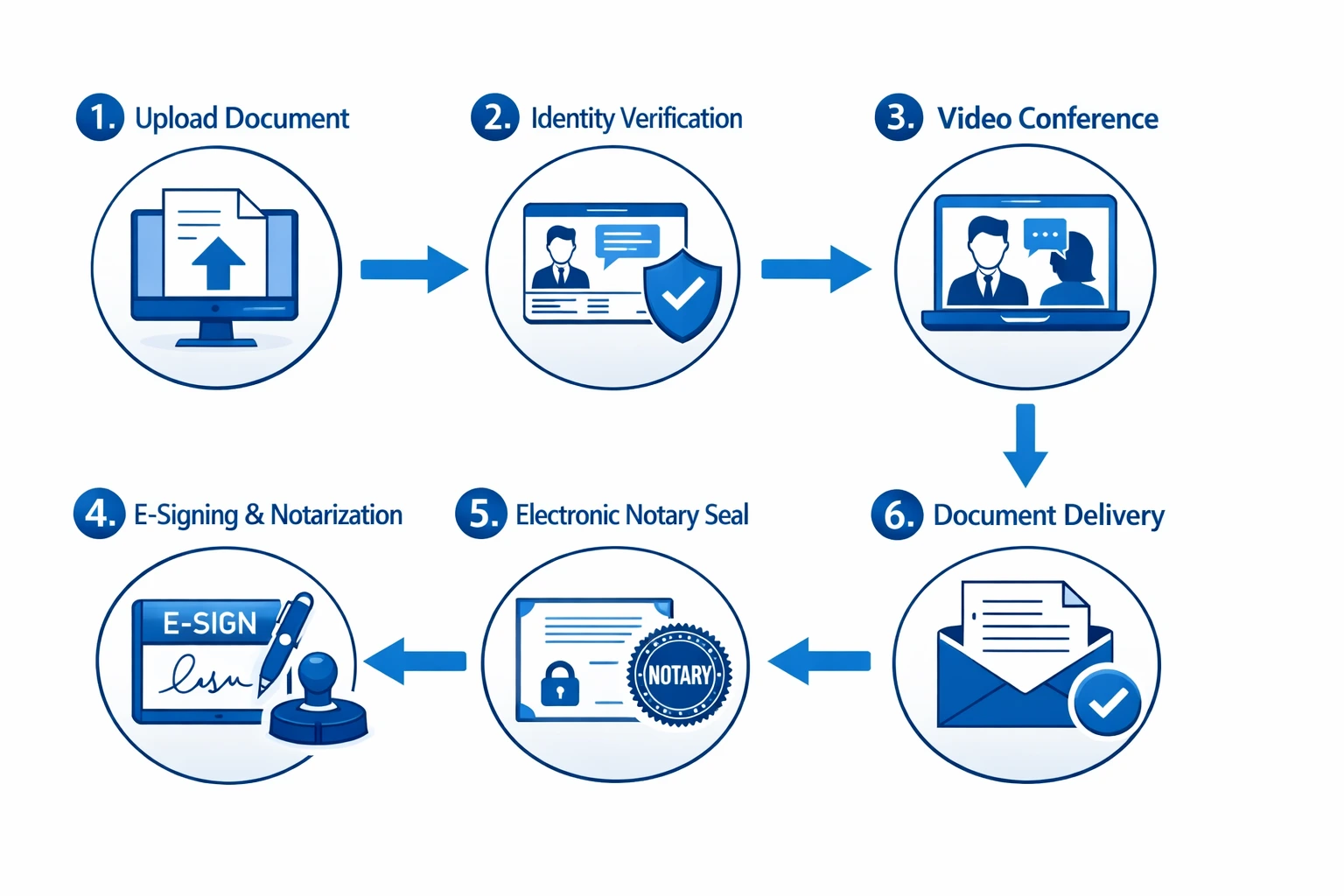
Let's walk through exactly what happens during an electronic notarization:
Step 1: Document Preparation You upload your document to a secure eNotary platform. The system checks that the file is in the right format and ready for notarization.
Step 2: Identity Verification The notary verifies who you are using multiple methods. This might include checking your government ID, answering knowledge-based questions about your history, or using credential analysis technology.
Step 3: Notary Review The notary reviews the document with you and confirms you understand what you're signing. They verify you're acting willingly and not under pressure.
Step 4: Electronic Signing You apply your digital signature to the document. The system encrypts this signature to prevent tampering.
Step 5: Notary Seal Application The notary adds their electronic notary seal and signature. This seal includes a timestamp and certificate that proves the document's authenticity.
Step 6: Secure Storage The notarized document is stored securely and delivered to you. You can download copies or share them as needed.
Legal Framework for Electronic Notarization
eNotary is fully legal in the United States, but the rules vary by state. Each state decides whether to allow electronic notarization and sets its own requirements for notaries and platforms.
The ESIGN Act (Electronic Signatures in Global and National Commerce Act) provides federal support for electronic signatures and electronic notarization. This law confirms that electronic records and signatures carry the same legal weight as paper ones.
Organizations like the National Notary Association provide guidance and standards to ensure eNotary services meet professional requirements. State notary commissions oversee and authorize notaries to perform electronic notarization.
Security Measures That Protect You
Security isn't an afterthought with eNotary. Multiple layers protect your documents and personal information:
- Identity proofing uses advanced verification methods that go beyond checking an ID
- Encryption protects your documents during transmission and storage
- Tamper-evident technology shows if anyone tries to alter a notarized document
- Audit trails record every action taken during the notarization process
- Session recordings (in RON) provide video proof of the entire transaction
These measures often exceed the security of traditional paper notarization, where documents can be lost, copied, or altered more easily.
Common Uses for eNotary Services
Electronic notarization works for many document types:
- Real estate transactions including deeds, mortgages, and closing documents
- Financial documents like loan applications and account changes
- Legal affidavits and sworn statements
- Business contracts and corporate filings
- Healthcare directives and powers of attorney
- Education documents including transcripts and permission forms
More industries adopt eNotary every year as they recognize its benefits for both businesses and customers.
Current Limitations to Consider
eNotary isn't perfect for every situation. Some states restrict which documents can use electronic notarization. Certain legal documents still require traditional paper notarization in some jurisdictions.
Technology access can be a barrier. Not everyone has reliable internet, a computer with a camera, or the digital skills needed for remote online notarization.
Cross-border recognition remains complex. While eNotary is growing internationally, not all countries accept electronically notarized documents yet.
These limitations are shrinking as technology improves and more states update their laws to embrace electronic notarization.
The Future of Electronic Notarization

The trajectory for eNotary points strongly upward. Remote online notarization continues expanding across more states and countries. Interstate acceptance is increasing as states recognize each other's electronic notarization practices.
Integration with digital identity systems will make verification even faster and more secure. As governments and businesses build fully digital legal ecosystems, eNotary will become a standard part of how we handle important documents.
Making the Right Choice
eNotary represents a significant improvement in how we handle document notarization. It offers convenience, security, and cost savings that traditional methods simply can't match.
Electronic notarization works best when you need speed, when meeting in person is difficult, or when you're coordinating signatures across different locations. It's ideal for routine business documents, real estate transactions, and most legal paperwork.
As digital transformation continues reshaping legal and business processes, eNotary isn't just an alternative. It's becoming the preferred method for millions of people who want faster, easier, and more secure notarization services.
The question isn't whether eNotary will replace traditional notarization. It's how quickly you'll start using it to make your life simpler.