Should You Build a Custom ERP? The Honest Decision Guide
Naapbooks Insights • Custom ERP • 11 min read
Running a business means juggling a lot of moving parts: finances, inventory, HR, customer records, and more. For decades, companies relied on enterprise resource planning (ERP) software to keep these functions connected. What's changed isn't the need for ERP it's how that software gets delivered.
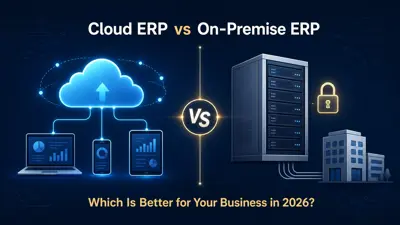
Older ERP systems lived on physical servers inside the office. They needed dedicated IT staff, big upfront budgets, and months of setup before they did anything useful. Cloud ERP flips that model. It's faster to launch, cheaper to run, and built for how businesses actually operate today spread across locations, dependent on real-time data, and unwilling to wait weeks for a system update.
This isn't a passing trend. It's becoming the default way companies manage their operations, and understanding why matters whether you're evaluating your first ERP system or planning a migration away from an aging one.
What Is Cloud ERP?
Cloud ERP is an enterprise resource planning system hosted on remote servers and delivered over the internet. Businesses access it through a browser instead of installing it on local hardware. Most cloud ERP platforms run on a SaaS (Software as a Service) model you pay a subscription, and the vendor handles hosting, security, and updates on their end.
Traditional ERP vs. Cloud ERP: What's the Real Difference?
| Factor | Traditional (On-Premise) ERP | Cloud ERP |
|---|---|---|
| Installation | Installed on company servers | Hosted by the vendor, accessed online |
| Upfront cost | High (hardware, licenses, IT staff) | Low (subscription-based) |
| Remote access | Limited or none | Full access from any device, anywhere |
| Updates | Manual, often scheduled downtime | Automatic, handled by the vendor |
| Scalability | Requires new hardware to grow | Scales with a plan or subscription change |
The core difference comes down to agility. A cloud-hosted system lets a business add users, open new locations, or expand into new markets without touching a single server.
Why Are Businesses Moving to Cloud ERP?
Cloud ERP adoption has picked up speed for a few concrete reasons not just because it's newer technology, but because it solves problems that on-premise systems were never built to handle.
- Remote and hybrid work. Teams working from multiple locations need software that isn't tied to an office network. Legacy systems weren't designed with this in mind; cloud platforms were.
- Scalability. A growing company can't afford to wait months for a hardware upgrade every time it adds staff or opens a new site. Cloud ERP expands with a business almost immediately.
- Digital transformation. As more core business functions move online, cloud ERP becomes part of a company's broader shift toward digital-first operations.
- Cost control. Server maintenance, in-house IT staff, and hardware refreshes add up. Moving to the cloud removes most of that overhead.
Key Benefits of Cloud ERP
Lower Costs, No Surprise Bills
Traditional ERP came with heavy spending on servers, licenses, and dedicated IT support. A subscription model changes that math businesses pay for what they use, and infrastructure costs mostly disappear.
Real-Time Data for Faster Decisions
Cloud ERP gives managers live visibility into financial reports, stock levels, and customer activity. Decisions get made on current numbers instead of a report that's already a week old, and clean, centralized data makes it easier to spot problems early.
Updates Happen Automatically
The vendor pushes updates on their end, so the business always runs the current version. There's no need to schedule downtime or bring in a specialist every time a patch is required one of the most underrated advantages of moving off legacy infrastructure.
Stronger Security Standards
Reputable cloud ERP vendors build in encryption, multi-factor authentication, role-based access controls, and regular compliance audits. For most mid-sized businesses, this is a higher security standard than what they could realistically build and maintain in-house which matters most for industries handling sensitive financial or customer data.
Everything Connects
Cloud ERP typically integrates with CRM platforms, e-commerce tools, payroll systems, and analytics dashboards. Instead of data sitting in separate silos, everything feeds into one connected view of the business.
Cloud ERP for Modern Enterprises
Larger organizations have different demands: thousands of users, multiple currencies, cross-border compliance, and operations spanning several countries. Enterprise-grade cloud ERP platforms are built specifically to handle that complexity.
- Remote and hybrid teams can access the same system from any location, so operations don't depend on where employees happen to be sitting.
- Automated workflows cut down on manual, repetitive tasks freeing staff for higher-value work.
- Cross-department collaboration improves because finance, operations, HR, and sales are no longer working from disconnected systems.
- Faster expansion becomes possible since scaling to new markets doesn't require rebuilding the entire system from scratch.
ERP Trends Shaping 2026 and Beyond
These aren't distant possibilities they're already changing how businesses use ERP systems right now.
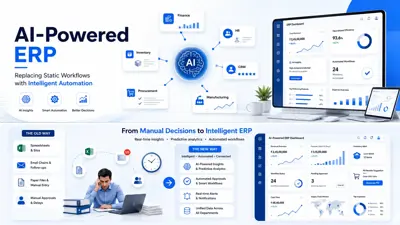
- AI-powered ERP. Machine learning models flag anomalies and surface patterns before they become real problems. Conversational AI tools are also making it possible to query business data using plain language instead of building custom reports.
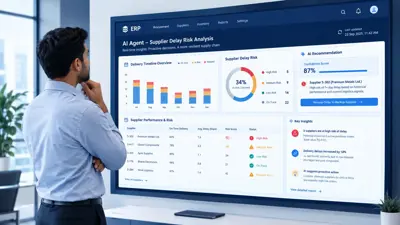
- Predictive analytics. Businesses are using predictive tools inside their ERP platforms to forecast demand, manage cash flow, and catch supply chain risks before they cause delays.
- Mobile-first platforms. Full-featured mobile apps now let managers approve purchase orders or check KPIs from a phone, not just a desktop.
- Deeper automation. Invoice matching, payroll processing, and inventory reordering are increasingly handled without manual intervention.
- Built-in compliance tools. As data regulations tighten globally, modern ERP platforms are baking compliance features directly into the system rather than leaving it to manual processes.
How Different Industries Benefit From Cloud ERP
Cloud ERP isn't one-size-fits-all most vendors now offer configurations tailored to specific industries. Here's how that plays out across sectors.
- Manufacturing: Tracks production schedules, manages raw materials, and helps reduce waste across complex supply chains.
- Retail and eCommerce: Connects online and offline inventory, manages returns, and tracks buying patterns in real time.
- Healthcare: Supports patient billing, regulatory compliance, and resource scheduling across hospitals and clinics.
- Finance and Accounting: Automates reconciliation, financial reporting, and audit trails.
- Logistics and Supply Chain: Gives full visibility into shipments, vendors, and warehouse operations reducing delays and unnecessary costs.
Challenges to Plan for Before Migrating
Cloud ERP has real advantages, but a rushed migration causes most of the pain businesses experience. Planning around these common obstacles makes for a much smoother rollout.
| Challenge | What It Involves |
|---|---|
| Data migration | Cleaning, reformatting, and validating years of historical data before it moves to the new platform |
| Integration gaps | Connecting a new cloud system to older software that wasn't built to share data easily |
| Training and adoption | Structured training and change management to get staff comfortable with a new system |
| Security due diligence | Evaluating a vendor's certifications, security practices, and data residency policies |
| Budget overruns | Implementation costs can climb without a clear scope working with an experienced partner reduces this risk |
Common mistake to avoid: Treating data migration as a quick copy-paste job. Rushed migrations are one of the most frequent causes of post-launch errors and reporting gaps.
How to Choose the Right Cloud ERP Solution
With many ERP providers in the market, selecting the right platform takes a structured evaluation. Follow these steps in order:
- Understand your business requirements. Audit your current processes first. Identify the gaps and bottlenecks your current system creates, and build a clear list of must-have features before you talk to a single vendor.
- Assess scalability and customization. Ask vendors directly how their platform handles new users, new locations, or new business lines. A good platform shouldn't require a full re-implementation every time the business grows.
- Check security and compliance standards. Look closely at how each vendor handles data protection, access controls, and regulatory compliance this matters even more if you operate in a regulated industry.
- Evaluate vendor support and reliability. A platform is only as good as the team behind it. Ask about uptime guarantees, support response times, and what implementation resources are included. Strong vendors offer ongoing training and a clear product roadmap, not just a one-time setup call.
Pros and Cons of Cloud ERP
Pros:
- Lower upfront investment
- Access from anywhere, on any device
- Automatic updates and maintenance
- Scales without new hardware
- Strong built-in security for most vendors
Cons:
- Ongoing subscription costs instead of a one-time purchase
- Dependent on internet connectivity
- Data migration can be complex for older systems
- Requires trust in a third-party vendor's security practices
Conclusion
The case for cloud ERP has never been stronger. Businesses still running on outdated, on-premise systems are taking on real risk in cost, in agility, and in how well they can compete.
Cloud platforms built around AI, real-time data, and seamless integration aren't a luxury reserved for large enterprises anymore. They're becoming the baseline expectation for any business that wants to keep growing over the next decade.
Whether you're a mid-sized manufacturer, a fast-growing retailer, or a global enterprise, the path forward runs through the cloud. The long-term payoff isn't just measured in dollars saved it's measured in time saved, risk avoided, and opportunities you're positioned to act on faster than competitors still stuck on legacy systems.