Agentic Ai Enterprise Software Development 2027
Naapbooks Insights • Agentic AI Enterprise Software • 15 min read
- What Is Agentic AI?
- How Is Agentic AI Different From Traditional AI?
- How Is Agentic AI Changing Enterprise Software Development?
- Where Can Businesses Use Agentic AI?
- What Are the Benefits of Agentic AI for Enterprises?
- What Mistakes Should Businesses Avoid?
- What Will Agentic AI Look Like in 2027?
- How Can Businesses Prepare for Agentic AI Adoption?
- Conclusion
- Frequently Asked Questions (FAQs)
Building software for a large organization is rarely simple. Teams write new code, maintain older systems, test every change, release updates, and keep documentation current. Some of this work needs deep human judgment. Some of it is repetitive.
That mix is one reason traditional development approaches are evolving. Businesses want their teams to spend more time on design and problem solving, and less on routine tasks. This is where Agentic AI in enterprise software development enters the conversation.
Agentic AI describes AI systems that can plan and carry out tasks toward a goal, instead of replying to one prompt at a time. It is becoming a bigger part of AI software development and business technology.
This article is written for business leaders, IT managers, and developers. You will learn what Agentic AI is, how it differs from traditional AI, where it can help software teams, which industries may use it, and which risks to manage. You will also get a step-by-step plan for getting ready.
What Is Agentic AI?
Definition: Agentic AI
Agentic AI is a type of goal-oriented AI. It works toward a specific goal with some independence. It can plan steps, take actions, use data, and adjust based on feedback.
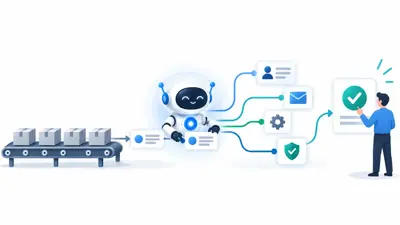
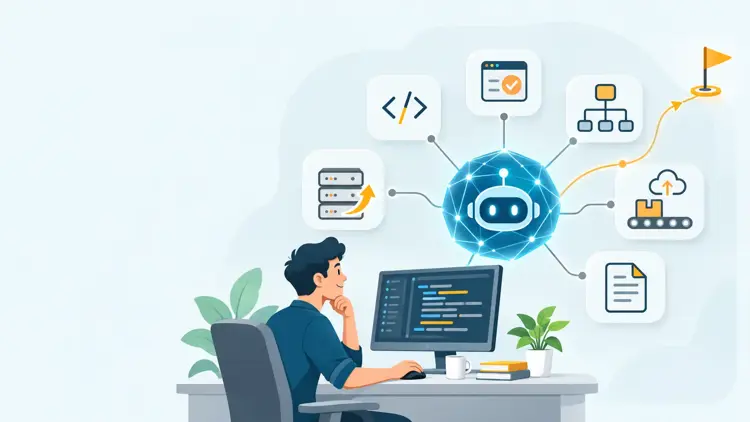
Think of AI agents as digital team members. You give them an objective, and they work out the steps to reach it. A traditional tool waits for your next instruction. AI agents can move through several connected steps on their own, within limits that people set.
In software teams, AI agents in software engineering can handle connected tasks such as writing code, running tests, and updating tickets. Developers stay in charge of the final decisions.
What Can Agentic AI Do?
Agentic AI has five key capabilities.
- Goal-oriented decision-making: The agent receives a clear objective. It chooses actions that move it toward that goal instead of waiting for step-by-step directions.
- Task planning and execution: A large goal is broken into smaller steps. The agent then carries them out in order.
- Real-time data analysis: The agent reviews current information, such as system activity or new requests, to decide what to do next.
- Learning from feedback: When people or systems give feedback, the agent can adjust its approach.
- Integration with business systems: To be useful, an agent needs to connect to the tools a business already uses, such as ticketing, code, or monitoring platforms.
Together, these abilities define Agentic AI development: building systems that act on a goal rather than only producing an answer.
How Is Agentic AI Different From Traditional AI?
Traditional AI usually responds to a user's instruction. You ask a question or give a command, it replies, and then it waits. Agentic AI can plan and run a sequence of tasks to reach a goal.
| Area | Traditional AI | Agentic AI |
|---|---|---|
| How it works | Responds to a single instruction | Plans and carries out multi-step tasks |
| Automation | Supports one task at a time | Can manage connected tasks toward a goal |
| Decision-making | Relies on the user to choose each next step | Chooses actions to reach a defined goal |
| Adaptability | Changes when the user changes the prompt | Adjusts based on data and feedback |
In short, traditional AI helps with a task. Agentic AI can help manage a workflow. That is why AI-powered automation built on agents covers more ground than single-step tools.
What Do These Differences Look Like in Practice?
These are hypothetical examples, not real customer cases.
- Customer support: A traditional AI tool might draft a reply when asked. An agent could review a ticket, check account details, and prepare the next steps for a person to approve.
- IT operations: A traditional tool might explain an error message. An agent could investigate the issue, suggest a fix, and send it for approval.
- Software development: A traditional tool might suggest a snippet of code when asked. An agent could take a task like fixing a reported bug, look for the likely cause, propose a change, run tests, and send the results to a developer for review.
The key difference is initiative within set limits. People still define the goal and approve what matters.
How Is Agentic AI Changing Enterprise Software Development?
To understand how Agentic AI is changing software development, it helps to look at the main stages of the work.
Quick Answer
Agentic AI can support enterprise software development in six areas: code generation, testing and debugging, project workflow automation, application modernisation, DevOps, and documentation. Human developers still review and approve important work.
Can Agentic AI Help With Code Generation?
Yes, in a supporting role. Agents can help developers write new code and improve existing code. This can speed up routine coding tasks. Code generation works best when developers check the output against the project's requirements, standards, and security needs before it goes any further.
How Does Agentic AI Support Testing and Debugging?
Agents can help identify errors and support automated testing. They can run checks, report failures, and point developers toward likely problem areas. Developers still decide how to fix complex issues. The benefit is more time for the problems that need human judgment.
How Can Agentic AI Automate Project Workflows?
Development work includes many repetitive tasks, such as updating tickets, passing work between team members, and sharing status updates. Intelligent automation can handle these tasks so teams spend less time on admin and more time on building.
Can Agentic AI Help With Application Modernisation?
Many organizations still run older software, often called legacy systems. Agents can support the analysis of these systems and help with migration planning. This connects directly to legacy system modernisation and to wider enterprise application development. People should validate any plan before a migration begins.
What Role Does Agentic AI Play in DevOps?
Agents can assist with deployment workflows and monitoring. DevOps workflows involve repeated steps, such as releasing updates and watching system health. Agents can help follow those steps and flag issues for people to review.
Can Agentic AI Create and Maintain Documentation?
Technical documentation can fall out of date when systems change. Agents can generate and update it, which helps teams keep records useful. A team member should still review the text for accuracy.
Taken together, these six areas touch many stages of the software development lifecycle, from planning and building to testing, release, and maintenance.
Where Can Businesses Use Agentic AI?
Agentic AI use cases in business reach beyond software teams. The table below shows potential applications by industry.
| Industry | Potential Application |
|---|---|
| Banking and FinTech | Transaction monitoring and customer support workflows |
| Healthcare | Administrative workflow automation |
| Manufacturing | Production monitoring and maintenance coordination |
| Retail and E-commerce | Inventory and order management |
| Enterprise IT | IT support and software operations |
| Logistics | Supply chain coordination |
Here is what each could look like in simple terms:
- Banking and FinTech: Agents could watch transactions and handle steps in customer support workflows.
- Healthcare: Agents could take on administrative tasks, which may free staff time for other work.
- Manufacturing: Agents could follow production data and help coordinate maintenance tasks.
- Retail and E-commerce: Agents could help track stock levels and manage orders.
- Enterprise IT: Agents could handle support requests and routine software operations.
- Logistics: Agents could help coordinate the many steps of a supply chain.
These are potential uses, not proven results. This article does not cite case studies, and outcomes depend on how each organization plans, builds, and manages its systems. Many of these uses rely on well-built enterprise AI solutions that fit existing processes.
What Are the Benefits of Agentic AI for Enterprises?
The benefits of Agentic AI for enterprises center on better use of time, people, and data. No measured results are included here, so read these as possible advantages.
- Improved operational efficiency: Connected tasks can move forward with less manual coordination.
- Reduced repetitive manual work: Routine tasks can shift to agents, so people spend less time on them.
- Faster software development cycles: Automating steps such as testing and documentation can help work move through stages more quickly.
- Better resource utilisation: Skilled people can focus on higher-value work while agents handle routine steps.
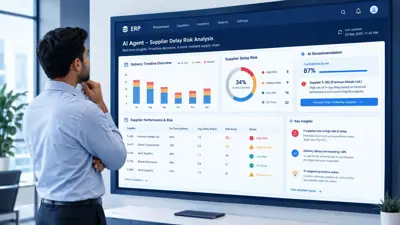
- Improved decision-making through data analysis: Agents can review data continuously and bring useful information to decision makers.
- Greater scalability: Automated processes can help a business handle more work without adding the same amount of manual effort.
What Are the Challenges and Risks of Agentic AI?
Agentic AI also brings real challenges. Understanding them early helps teams plan.
- Data privacy and security concerns: Agents connect to business systems and data, so access rules must be set carefully.
- Incorrect AI-generated decisions: An agent can make a wrong call. Outputs and actions need review, especially for important tasks.
- Integration with existing enterprise software: Connecting agents to current systems can be complex and may take planning and technical work.
- Human oversight and accountability: People must stay responsible for outcomes. A human-in-the-loop approach keeps a person involved in key decisions.
- Implementation costs and infrastructure requirements: Adoption may need investment in tools and technical setup. Costs differ by organization, so no figures are given here.
- Regulatory and compliance considerations: Organizations should check which rules apply to their industry and region before they deploy agents.
What Mistakes Should Businesses Avoid?
Based on the risks above, these are common pitfalls to avoid.
- Starting too big: A large first project is harder to manage and measure. Begin with a small, clear project.
- Skipping human approval: Agents can be wrong, so critical decisions should always have a person's sign-off.
- Ignoring data governance: Agents work with business data. Without clear security and privacy policies, sensitive information may be exposed.
- Not checking existing infrastructure: If current software is not reviewed first, integration problems can appear late.
- Automating without a clear process: If a business has not identified which tasks are repetitive, it may be unclear where agents will help.
- Expanding before measuring: Without baseline results, it is hard to know whether the project worked.
What Will Agentic AI Look Like in 2027?
This article does not include adoption statistics, so the points below describe likely direction rather than measured results.
- Growing adoption of AI-powered development tools: More teams may bring these tools into daily work.
- Developers working alongside AI agents: Developers set goals, review output, and refine the work. AI agents handle more of the routine steps.
- Rising demand for intelligent enterprise applications: Businesses want software that can act on data, not just store it.
- More AI-driven process automation: More business processes may be coordinated by connected agents.
- A stronger focus on responsible AI: As agents take on more tasks, safe and well-governed use matters more. Responsible AI practices such as security, oversight, and compliance are part of that.
The overall picture is collaboration. People and agents work best together.
How Can Businesses Prepare for Agentic AI Adoption?
A careful start makes adoption smoother. Follow these six steps.
Step-by-Step Guide
- Identify repetitive business processes. List tasks that are routine and time-consuming. These are the most natural places to test agents, and they help you set a clear goal.
- Evaluate your existing software infrastructure. Review the systems agents would need to connect to. This helps you spot integration challenges early.
- Start with a small, measurable project. Choose one focused use case with clear success criteria. A small start lets your team learn and adjust.
- Establish data security and governance policies. Decide what data agents can access and who is responsible for it. Check which regulations apply to your industry and region.
- Keep human approval for critical decisions. Name who reviews and approves important actions. This keeps accountability with people.
- Measure performance before expanding. Compare results with your starting point. Expand only when the project shows clear value.
Agentic AI Readiness Checklist
- ☐ We have listed the repetitive processes we want to improve
- ☐ We have reviewed how our current systems would connect to agents
- ☐ Our first project is small and has clear success measures
- ☐ Data access and security rules are written down
- ☐ A named person approves critical decisions
- ☐ We know which compliance rules apply to us
- ☐ We have a plan to review results before expanding
Key Takeaways
- Agentic AI works toward goals by planning and carrying out multi-step tasks.
- Traditional AI mainly responds to single instructions.
- It can support code generation, testing, workflow automation, modernisation, DevOps, and documentation.
- Possible benefits include efficiency, less repetitive work, and scalability.
- Risks include security, incorrect decisions, integration, cost, and compliance.
- Human oversight remains essential.
- Starting small and measuring results is a sensible path to adoption.
Conclusion
Agentic AI is changing how enterprises approach software work. It can plan tasks, use data, and act toward goals, which supports coding, testing, modernisation, DevOps, and documentation. It also carries risks that need attention, from data security to incorrect decisions.
The strongest results come from pairing AI capability with human expertise. Businesses that start with focused projects, protect their data, and keep people in charge of key decisions will be better prepared. If this area interests you, a small, well-measured first project is a practical way to begin exploring Agentic AI development.
Frequently Asked Questions (FAQs)
What is Agentic AI?
Agentic AI refers to AI systems that work toward specific goals with some independence. They can plan tasks, take actions, use data, and learn from feedback.
How is Agentic AI different from traditional AI?
Traditional AI usually responds to one instruction at a time. Agentic AI can plan and complete multi-step tasks toward a goal and adjust based on feedback.
How can Agentic AI help in enterprise software development?
It can support code generation, testing and debugging, project workflow automation, application modernisation, DevOps tasks, and documentation. Developers review and approve important work.
What are the main risks of Agentic AI?
The main risks are data privacy and security concerns, incorrect AI decisions, difficulty integrating with existing software, unclear accountability, implementation costs, and regulatory or compliance requirements.
Will Agentic AI replace human developers?
The direction described in this article is developers working alongside AI agents, not being replaced by them. Developers set goals, review output, and make key decisions.
How can a business start with Agentic AI?
Identify repetitive processes, review your current software, pick one small and measurable project, set data security and governance rules, keep human approval for critical decisions, and measure results before expanding.
Which industries can use Agentic AI?
Potential uses include banking and FinTech, healthcare, manufacturing, retail and e-commerce, enterprise IT, and logistics. These are potential applications, and results depend on each organization's setup.