₹58.5 Lakh for an SDD Lapse: What the BofA Securities Settlement Means for Intermediaries

InsiderQ • SDD for Intermediaries • 10 min read
In this article
What actually happened, in order of dates
“Settled” is not “fined”, and the difference matters
The SDD obligation does not start at the listed company
What “failed to maintain” can mean in practice
The real lesson is in the timeline, not the amount
Eight checks an intermediary can run this quarter
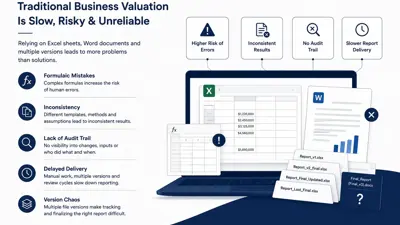
Can a spreadsheet carry this?
What to do before someone asks you for evidence
Most compliance teams at merchant bankers, brokers and advisory firms have quietly filed the Structured Digital Database under “the issuer’s problem”. The client is the listed company. The client maintains the SDD. The deal team signs an NDA and gets on with the mandate.
A settlement reported in May 2026 is a reminder that this reading is incomplete. SEBI’s proceedings in that matter were not about a trade, a profit or a tip-off. They were about records — specifically, the allegation that a merchant banker had failed to maintain a Structured Digital Database as prescribed under the insider trading regulations. The matter closed on payment of ₹58.50 lakh.
What actually happened, in order of dates
Quick answer: SEBI issued a show cause notice in May 2025 alleging that BofA Securities India, as a merchant banker, had failed to maintain a Structured Digital Database as prescribed under the SEBI (Prohibition of Insider Trading) Regulations, 2015. The firm applied to settle, paid ₹58.50 lakh, and the adjudication proceedings were disposed of. There was no admission or denial of the findings.
The sequence, as reported in the press:
- 26 May 2025 — show cause notice. SEBI issued an SCN to the firm. Press reports describe the proceedings as adjudication under Section 15HB of the SEBI Act, 1992 — the residuary penalty provision, which applies where no separate penalty is specified and carries a range of ₹1 lakh to ₹1 crore. Reports also refer to the SEBI (Merchant Bankers) Regulations, 1992 alongside the PIT Regulations.
- 1 July 2025 — settlement application. Filed, in the standard formula, without admitting or denying the findings of fact and conclusions of law.
- February 2026 — High Powered Advisory Committee. The HPAC considered the application and recommended settlement terms.
- 2 April 2026 — approval. SEBI’s panel of whole-time members approved the recommendation.
- 4 May 2026 — remittance. The settlement amount of ₹58.50 lakh was remitted and the adjudication proceedings initiated by the SCN were disposed of. As is usual in settlement orders, SEBI retains the right to reopen the matter in the event of inadequate disclosure or a breach of the undertakings given.
Two things the published coverage does not contain, and that anyone drawing conclusions should be careful about: the specific regulation numbers alleged to have been breached, and what was actually missing from the database — whether it did not exist, lacked time stamps, lacked an audit trail, or was incomplete for the period examined. The settlement order is the only reliable source for either, and it is worth reading rather than relying on the reports.
One clarification, because the two are easy to conflate: separate reports in January 2026 described a different and unrelated SEBI matter concerning the same firm. That matter is not this one, and nothing here refers to it.
“Settled” is not “fined”, and the difference matters
Quick answer: A settlement charge is not a penalty and a settlement is not a finding of guilt. But it is a public record, it closes the matter on SEBI’s terms, and the reputational effect does not turn on the legal distinction.
Several headlines described the firm as having been “fined”. It was not. Under the settlement mechanism, an applicant pays a settlement amount without admitting or denying the findings, and the proceedings are disposed of without any adjudication of the allegation. No violation was established.
That distinction is worth getting right, and also worth not hiding behind. A settlement order is published, indexed and permanent: it names the entity, the allegation and the amount. For a firm whose business depends on being trusted with other people’s confidential information, the line in the public record is the cost, not the ₹58.50 lakh.
The SDD obligation does not start at the listed company
Quick answer: Regulation 3(5) of the PIT Regulations casts the database duty on every person required to handle UPSI, not only on the issuer. For an intermediary, the deal team handles UPSI by definition.
This is the part that gets missed, so it is worth being precise about where the obligation comes from.
- Regulation 3(5) requires the maintenance of a structured digital database containing the nature of the UPSI and the names and other particulars of the persons who shared it and who received it, with internal controls and checks such as time stamping and audit trails. It applies to the board of directors or the head of the organisation of every person required to handle UPSI. A merchant banker running a capital-raise mandate, a broker on a block deal, a law firm on a scheme of arrangement and an auditor mid-audit are all handling UPSI.
- Regulation 3(6) deals with retention, and the trigger matters: the database is to be preserved for a period of not less than eight years after completion of the relevant transactions, and for longer where proceedings have been commenced, until those conclude. “Eight years” without the trigger is a misreading, and in practice it is the harsher one.
- Regulation 9A and Schedule C reinforce the position for intermediaries and fiduciaries through the code of conduct and the obligation to maintain lists of persons with access to UPSI. SEBI’s comprehensive FAQs on the PIT Regulations dated 31 December 2024 address this directly at questions 5 and 6.
The 2025 amendment, notified on 11 March 2025 (SEBI/LAD-NRO/GN/2025/235) and in force from the ninetieth day after gazette publication, significantly widened the illustrative list of what constitutes UPSI. For an intermediary, a wider definition of UPSI means more conversations that belong in the database, not fewer. If your firm’s SDD scope was set before March 2025 and has not been revisited since, that is a gap worth closing.
If you want this mapped to your category rather than to a listed company’s, SDD requirements for intermediaries and the position for fiduciaries set it out separately.
What “failed to maintain” can mean in practice
Quick answer: It rarely means no database at all. More often it means a database that exists but cannot evidence when an entry was made or whether it was changed afterwards.
We do not know which of these applied in the BofA matter, and the paragraphs below are a general description of where firms are typically found short, not an account of that case. The common failures are:
- Typed timestamps. A date column someone fills in by hand is not a time stamp. Regulation 3(5) asks for internal controls such as time stamping, which implies the system records the time, not the user.
- No audit trail of changes. A database that records entries but not amendments cannot answer the only question that matters in an examination: was this row written at the time, or written later?
- Scope set too narrowly. UPSI shared with a prospective investor, a valuer, a printer or a legal adviser is still UPSI. If the database only covers the core deal team, the trail stops where the risk starts.
- Gaps around the mandate boundary. The first UPSI usually moves before the engagement letter is signed, and the last moves after the transaction is announced. Databases opened on mandate-start dates miss both ends.
- Retrospective reconstruction. A database assembled after an SCN arrives is worse than a thin one, because the reconstruction itself becomes a question.
The real lesson is in the timeline, not the amount
Quick answer: Roughly twelve months ran from show cause notice to disposal. The records that decided the outcome were already fixed before the notice arrived.
Count the elapsed time. The SCN landed in May 2025 and the matter closed in May 2026, and in between sat a settlement application, an internal committee, the HPAC and approval by the panel of whole-time members — a year of senior legal, compliance and management attention on a records question. By the time the notice arrived, nothing could be done about the substance: whatever the database did or did not contain, it contained it before anyone at the firm knew SEBI was looking.
An SDD is the one compliance artefact you cannot improve retrospectively. Its value is entirely a function of having been maintained contemporaneously.
Eight checks an intermediary can run this quarter
Quick answer: Work through these in order. Each is answerable in an afternoon, and each produces evidence rather than an opinion.
- Write down which of your activities handle UPSI. By business line and by mandate type. Date the document and have it approved at the level the regulation names — the board or the head of the organisation. An undocumented scope decision is indistinguishable from no scope decision.
- Name an owner for the database. One person accountable for its completeness, not a committee and not “compliance” generally.
- Check that every entry carries four facts. The nature of the UPSI, who shared it, who received it, and when. If any one of the four is routinely blank, the entry does not do its job.
- Confirm your time stamps are system-generated. Open a recent entry and ask whether a user could have set that time. If they could, the control is not a control.
- Confirm the audit trail records amendments. Not just insertions. Change a test entry and check whether the previous value and the identity of the person who changed it survive.
- Check retention against the right trigger. Not less than eight years after completion of the relevant transactions, and until the conclusion of any proceedings that have been commenced. Then check that your IT retention policy and your backup rotation actually honour it.
- Reconcile the database against your mandate list. Pull the last eight closed mandates. Every one of them should have an SDD trail. The ones that do not are your finding.
- Run a retrieval drill. Pick a mandate that closed eighteen months ago and ask the owner to produce the complete UPSI trail for it, in a form a certifying professional or an inspecting authority could read, within one hour. How that goes is your honest compliance position.
Our SDD and SEBI PIT compliance FAQs cover the questions that come up most often while working through this, and the compliance guides go deeper on scope and record structure. If you would rather begin with a score than a checklist, the SDD compliance score check covers the same ground in a few minutes.
Can a spreadsheet carry this?
Quick answer: A spreadsheet can hold the four fields. What it cannot do is evidence that a row was written when it says it was and has not been altered since.
This is not a sales argument but a property of the file format. A shared workbook can be sorted, back-dated, overwritten and saved without any trace of what it said before, so nothing in it answers the examiner’s question. Access controls and version history on the file store help, but they sit outside the record rather than inside it, and are usually administered by the same team whose entries are being tested.
What a purpose-built database adds is narrow and specific: entries written by the system rather than typed, an audit trail that survives amendment, controlled access, and retention that does not depend on someone remembering. The right word for this is tamper-evident — alteration leaves a mark. A vendor who tells you their database is immutable is overstating it: if your firm holds the server and the database credentials, your own administrator can reach the rows. What matters is that doing so cannot be concealed. Who can actually reach your SDD data is the question to ask a vendor, ahead of cloud versus on-premise.
What to do before someone asks you for evidence
Quick answer: Fix the scope document, the time stamps and the retention trigger first. They are the three that cannot be repaired after the fact.
If you take one thing from this settlement, make it the order of events rather than the figure. A show cause notice arrives about a period that is already closed, no amount of remediation afterwards changes what the records say, and a year of senior attention goes into managing an outcome that was determined by housekeeping nobody prioritised at the time.
For most intermediaries this is not a large project. The obligations are narrow, the fields are few, and the volume of UPSI events in a year is modest next to almost anything else compliance handles. What makes it fail is that it is nobody’s job until it is suddenly everybody’s.
InsiderQ is an SDD and UPSI management solution built for this requirement, with InsiderQ I&F as the edition for intermediaries and fiduciaries. It records entries with system-generated time stamps and a tamper-evident audit trail, and it is deployed so that the entity holds its own data. To be clear about what no product can offer: no SEBI certification, approval or empanelment exists for SDD software, for any vendor, and the regulatory obligation stays with the regulated entity. Software makes the record defensible; it does not discharge the duty.
Review your SDD scope this quarter, before the next mandate opens. To see structured UPSI recordkeeping in practice, explore InsiderQ’s UPSI management solution or request a walkthrough.
This article is educational and is based on press reports of a published SEBI settlement order. A settlement involves no admission or denial of the findings and establishes no violation. Regulations, circulars and FAQs change, so verify current requirements and the contents of any order against the notified text and with your compliance adviser or certifying professional.
Rahul Singh