How AI Agents Will Reshape Business Operations in 2027
Naapbooks Insights • Agents Operations • 15 min read
Businesses handle more tasks, more data, and more customer requests than ever. Teams answer the same questions, update the same records, and chase the same approvals every day. That work takes time that people could spend on harder problems.
AI is changing how companies deal with this load. AI tools are appearing in more of the software that businesses use, and owners are asking how to use them well. One idea is getting a lot of attention: the AI agent. It is software that can take on a task, work through the steps, and report back.
Businesses want smarter ways to manage daily work. Used with care, AI agents can help them save time and improve the quality of that work. This guide explains what AI agents are, how they differ from chatbots and traditional automation, where they can help, and how to prepare for 2027. It also covers the risks, because AI agents are not a perfect fix.
A note on sources: this guide explains general business use cases. It does not rely on specific studies or statistics.
What Are AI Agents?
Definition: AI Agent
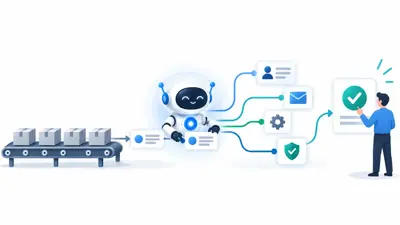
An AI agent is a software program that works toward a goal with limited step-by-step instruction. It can understand a request, decide what to do next, use business data and tools, and finish the task or pass it to a person.
How Do AI Agents Work?
A typical AI agent follows a simple loop:
- Receives a goal. A person or a system gives it a request, such as “sort today’s invoices.”
- Gathers information. It reads the data and documents it is allowed to use.
- Decides the next step. It chooses an action that moves the task forward.
- Takes action. For example, it updates a record or drafts a reply.
- Checks and reports. It reviews the result, then finishes the task or asks a person for help.
Real products vary in how much they can do alone. Businesses usually set what an agent may do and when a person must step in.
How Are AI Agents Different from Chatbots?
Quick Answer
A chatbot mainly answers questions in a conversation. An AI agent can also take action, such as updating a record or starting a task in another system, to reach a goal.
A basic chatbot waits for a question and replies. An AI agent can plan several steps, use other software, and complete a task. The line can blur, because some chatbots now connect to other tools. A useful test is whether the system only talks or can also act.
Simple Examples of AI Agents in Everyday Business
These are hypothetical examples that show the idea. They are not case studies.
- An agent reads incoming invoices, pulls out the key details, and sends them for approval.
- An agent answers a customer’s order question, checks the order record, and logs the request.
- An agent watches stock levels and flags items that need reordering.
Why Are Businesses Starting to Use AI Agents?
Businesses look at AI agents for five practical reasons:
- To reduce manual work. Staff spend less time on routine, repeated tasks.
- To complete tasks faster. An agent can work through steps quickly, so work moves along sooner.
- To improve customer service. Customers can get answers and follow-ups with less waiting.
- To manage large amounts of business data. Agents can sort and organize information that is hard to handle by hand.
- To make better business decisions. Clear, organized data helps people decide with better information. The decision still belongs to people.
How AI Agents Can Help Different Business Departments in 2027
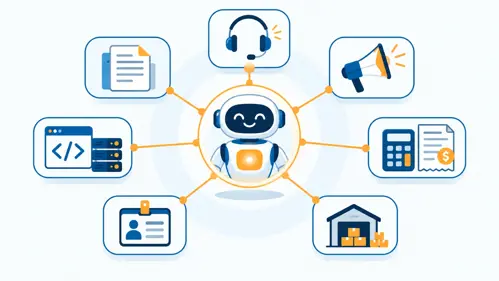
AI agents can support many parts of a business. The uses below are possible areas of support, and each one needs human review.
Managing Daily Office Tasks
Office work has many small tasks that repeat all day. An AI agent can take on part of that load.
- Handle repetitive work, such as sorting requests or updating routine entries.
- Organize business information so staff can find it faster.
- Manage documents and reports by filing, drafting, or summarizing them for review.
Improving Customer Support
- Answer common customer questions.
- Help customers find the right information, such as product details or policies.
- Manage customer requests and follow-ups so they do not sit unanswered.
Supporting Sales and Marketing Teams
- Find potential customers who match what the business sells.
- Help with follow-ups, such as reminders to contact a lead.
- Understand customer interests by reviewing how customers interact with the business.
- Support marketing activities, such as organizing campaign tasks.
Managing Finance-Related Tasks
- Help with invoice processing.
- Track business expenses.
- Identify unusual transactions for a person to review. An unusual item is not always a problem.
- Organize financial records.
Finance work needs extra care, so a person should check the results.
Improving Inventory and Supply Management
- Track available stock.
- Identify products that need restocking.
- Help the business plan its inventory.
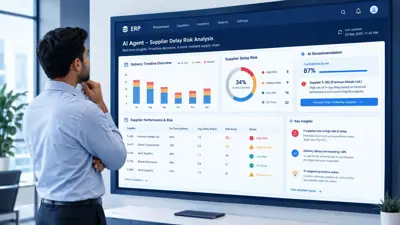
- Monitor supply issues, such as delays.
Making HR Activities Easier
- Help with recruitment tasks, such as organizing applications.
- Answer common employee questions.
- Support new employee onboarding.
- Manage employee information. This data is sensitive, so privacy controls matter.
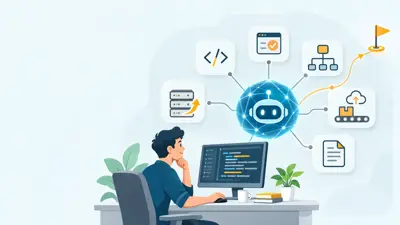
Supporting IT and Software Teams
- Find software issues.
- Help with software testing.
- Monitor system performance.
- Support software development tasks. Developers still review the work.
AI Agents vs Traditional Automation
Definition: Traditional Business Automation
Traditional business automation uses fixed rules set in advance. When a set condition happens, the software performs a set action, such as sending a confirmation email after a form is submitted.
AI agents work differently. They aim at a goal, handle varied inputs such as free text, and choose steps along the way. Traditional automation is predictable, but it struggles when a situation falls outside its rules.
| Aspect | Traditional Automation | AI Agents |
|---|---|---|
| How it works | Follows fixed rules and steps | Works toward a goal and chooses steps |
| Handles change | People must update the rules | Can adjust to new situations, but results need checking |
| Best for | Predictable, repeated tasks | Tasks with varied inputs or several steps |
| Main limitation | Struggles outside its rules | Can give incorrect results, so it needs monitoring |
Choose traditional automation when a task is the same every time. Consider AI agents when tasks vary, involve reading text, or need several steps. Many businesses may use both.
Benefits of Using AI Agents in Business
Used well, AI agents can offer these benefits:
- Saves time and effort. Routine work takes less of the day.
- Reduces repetitive manual work. Staff can focus on tasks that need judgment.
- Helps teams complete tasks faster. Work moves through its steps with fewer delays.
- Improves customer experience. Customers can get answers and follow-ups sooner.
- Supports better business decisions. Organized data gives managers clearer information.
- Helps businesses manage growing workloads. An agent can take on more routine tasks as the workload grows.
Challenges of Using AI Agents
AI agents also bring risks. Plan for these five:
- Data security and privacy concerns. Agents may use sensitive business and customer data. Decide what data they can reach, and protect it.
- Connecting with existing software. An agent works best when it can reach your current tools. Check how easily they connect before you commit.
- Initial setup and maintenance costs. Setup takes effort, and the system needs upkeep over time. Include both in your budget.
- Possibility of incorrect results. AI can make mistakes. Check important outputs.
- Need for human monitoring. Someone should watch how the agent performs and step in when needed.
Will AI Agents Replace Employees?
AI agents are better seen as support for employees than as a full replacement. They can take over certain tasks, but human knowledge and decision-making remain important. As tasks change, roles may change too, and teams may need new skills.
Which Tasks Can AI Agents Handle?
Tasks that are routine, repeated, and based on clear information suit AI agents best. Examples include sorting requests, organizing records, answering common questions, and drafting routine documents.
Why Human Judgment Still Matters
People understand context, weigh choices, and take responsibility for decisions. AI can give wrong results, so a person should review important work, especially in areas like finance and HR.
How Employees Can Work With AI Agents
- Hand repeated tasks to the agent and keep the tasks that need judgment.
- Review the agent’s work before it affects customers or records.
- Share feedback so the system can be improved.
- Learn what the agent can and cannot do.
How Can Businesses Prepare for AI Agents in 2027?
Six steps can help a business get ready:
- Identify tasks that take too much time. List work that repeats often or slows teams down.
- Find areas where AI can help. Match those tasks to the department uses above.
- Choose the right AI solution. Pick one that fits your tasks, data, and security needs.
- Connect AI with existing business software. An agent is more useful when it can reach the systems you already use.
- Start with small projects. A small pilot shows what works before you expand.
- Check results and improve the system. Review errors, time saved, and staff feedback, then adjust.
AI Agent Readiness Checklist
- ☐ List the tasks that take the most time.
- ☐ Decide which tasks are repetitive enough for an AI agent.
- ☐ Review what data the agent would use and how it will be protected.
- ☐ List the software the agent must connect to.
- ☐ Choose one small project to start with.
- ☐ Name the person who will monitor the results.
- ☐ Set a date to review results and make changes.
Common Mistakes to Avoid
- Starting too big. A large rollout is harder to control. Begin with one small project.
- Skipping human review. Wrong results can go unnoticed. Keep people checking, especially in finance and HR.
- Ignoring data security. Decide what the agent can access before setup.
- Overlooking existing software. An agent that cannot connect to your tools may add work instead of saving it.
- Not measuring results. Without a review, you cannot tell whether the agent helps.
What Is the Future of AI Agents?
No one can predict exact timing. Still, these changes look likely as AI tools develop. They are expectations, not verified forecasts.
- More businesses using AI-powered tools. AI agents may become a common part of daily work.
- Better connections between software systems. Agents may work across more tools with less manual setup.
- Faster business operations. Routine steps may finish sooner.
- More personalized customer services. Businesses may respond to customers in ways that better fit each person.
- Growing use in different industries. More sectors may find uses for AI agents.
How Naapbooks Can Help Businesses with AI and Software Solutions
Adopting AI agents often needs software work, such as connecting systems and building the right tools. Naapbooks offers help in these areas:
- Custom software development
- AI integration
- Business process automation
- Web and mobile application development
- Software built according to business needs
Businesses that want to explore these options can speak with the Naapbooks team about their needs.
Conclusion
AI agents can change business operations by taking on routine tasks, supporting customer service, and helping teams work with data. They work best alongside people, with clear limits and regular checks.
Businesses that understand these opportunities, and the risks, can make better choices. A good next step is simple: pick one time-consuming task, test an AI-based solution on a small scale, and learn from the results. Exploring AI-based solutions now can help a business be ready for 2027.
Key Takeaways
- AI agents work toward a goal, use business data and tools, and can take action. That sets them apart from basic chatbots.
- Traditional automation follows fixed rules. AI agents suit tasks that vary or need several steps.
- Possible uses include office tasks, customer support, sales and marketing, finance, inventory, HR, and IT.
- Key challenges are data security, software connections, setup and upkeep costs, incorrect results, and the need for human monitoring.
- AI agents are better seen as support for employees. People keep the judgment and the final decisions.
- To prepare, find time-consuming tasks, start with a small project, and review the results.
Frequently Asked Questions (FAQs)
What is an AI agent in simple words?
An AI agent is software that works toward a goal. You give it a task, and it figures out the steps, uses the data and tools it can access, and completes the work or asks a person for help.
How do AI agents work in businesses?
They receive a request, gather information from connected data and software, decide the next step, take action, and check the result. The business sets what the agent can access and when a person must review the work.
What is the difference between AI agents and chatbots?
A chatbot mainly answers questions in a conversation. An AI agent can also take action toward a goal, such as updating a record or starting a task in another system. Some chatbots now connect to other tools, so the line can blur.
Can AI agents help small businesses?
They can help with areas such as customer support, finance tasks, and daily office work. A small business should start with one small project, check the results, and plan for setup and maintenance costs.
Which business tasks can AI agents manage?
They suit routine, repeated tasks based on clear information. Examples include office tasks, customer questions, sales follow-ups, invoice processing, stock tracking, HR questions, and software testing. A person should review the results.
Are AI agents safe for business use?
They can be, with care. The main risks are data security and privacy concerns and incorrect results. Limit what data an agent can access, protect that data, and keep people monitoring the work.
Will AI agents replace human employees?
They are better seen as support. AI agents can take over certain routine tasks, but human knowledge and decision-making remain important. Roles may change as tasks change.
How can a business start using AI agents?
First, identify tasks that take too much time and find where AI can help. Then choose a suitable solution, connect it to your existing software, and start with a small project. Finally, check the results and improve the system.